
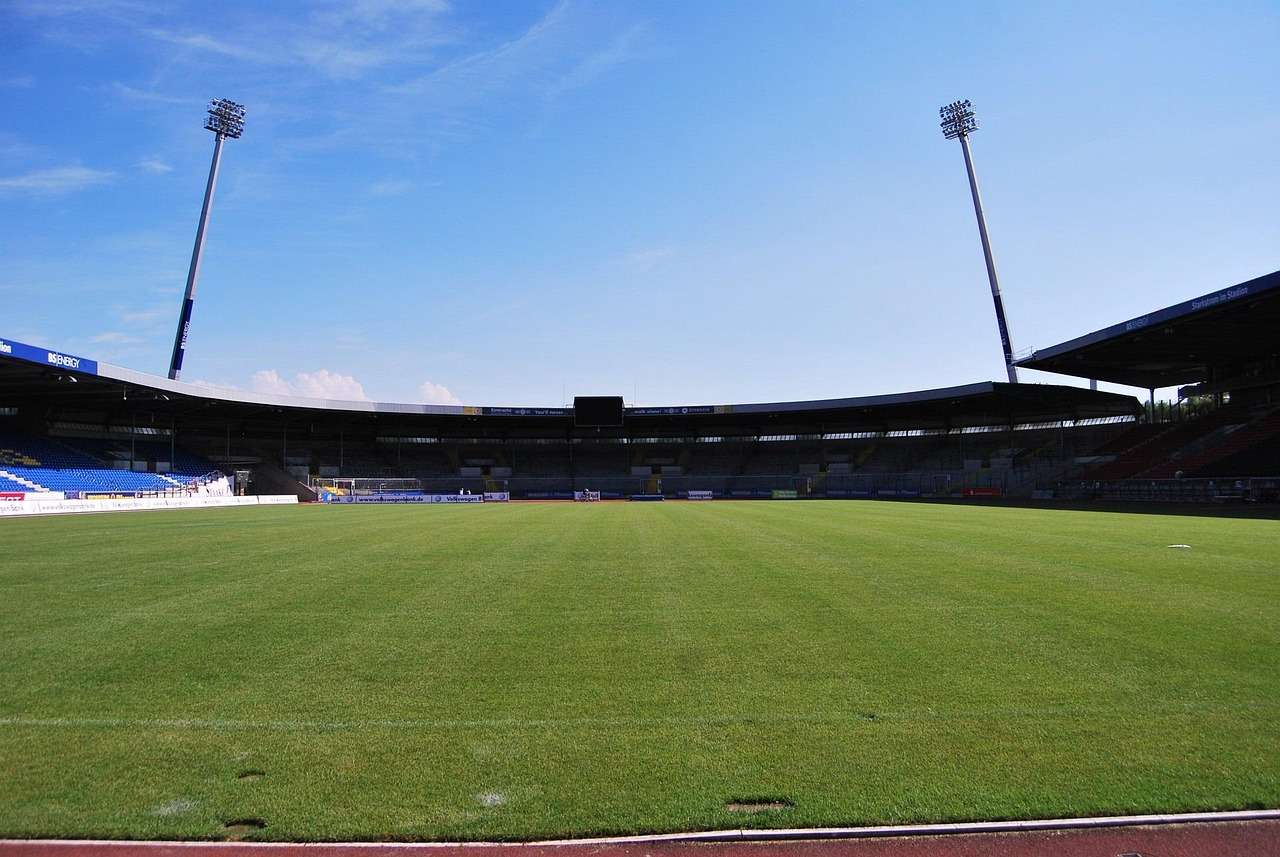
Finance Assets arranges asset finance for sports and event venues, helping UK stadiums, sports clubs, arenas, conference and wedding venues and event companies fund LED screens, PA systems, floodlighting, turnstiles, grounds equipment, hospitality fit-outs and temporary structures.
Asset finance for sports and event venues spreads the cost of that equipment over 2 to 7 years, so ticket, hospitality and booking income pays for the kit as it is used. It suits clubs upgrading a ground, venues improving the visitor experience, and event companies adding to their stock of staging and structures.
Written by Marcus Wright, founder of Bolton Business Finance Ltd, in financial services since 2008 and a commercial finance broker since 2019. Last reviewed October 2026.
On this page
The short version
- Asset finance lets sports and event venues spread the cost of equipment over 2 to 7 years.
- Screens, sound, access control, catering, grounds equipment and installation from different suppliers can go on one agreement.
- Payments can sometimes be shaped around the season, with lower payments when income is quieter.
- Lenders fund equipment that can be removed and resold. Pitch surfaces and building work are harder and usually need another route.
- Finance Assets arranges asset finance for venues and clubs trading as limited companies, LLPs and other incorporated bodies, and for sole traders and partnerships on agreements over £25,000.
| Item | Detail |
|---|---|
| Equipment covered | LED screens and scoreboards, PA and sound, floodlight fittings, turnstiles and ticketing, CCTV, grounds equipment, catering and bars, hospitality fit-out, staging and temporary structures |
| Terms | Usually 2 to 7 years. Screens and floodlight fittings suit longer terms than IT and ticketing hardware |
| Paid upfront | Hire purchase: often a 10% deposit plus VAT. Leases: usually 1 to 3 rentals in advance |
| New or used | New and used, including used grounds equipment and staging from established dealers |
| Payment profile | Fixed monthly, or seasonal with lower payments in the close season, subject to the lender |
| Who we help | Limited companies, LLPs and other incorporated bodies, plus sole traders and partnerships on business agreements over £25,000 |
Equipment we finance for sports and event venues
Lenders will fund most of the equipment a venue relies on to put on events and look after visitors. Each group links to our detailed guide where we have one.
| Equipment group | Examples |
|---|---|
| Screens and sound | LED big screens, scoreboards, perimeter advertising boards, PA and voice alarm systems. See audio visual equipment finance |
| Lighting | LED floodlight fittings, arena and stage lighting, and lighting control |
| Access and security | Turnstiles, ticket scanners, access control, CCTV and stewarding radios |
| Grounds and pitch care | Mowers, tractors, utility vehicles, line markers, pitch renovation machines and grow lights |
| Catering and bars | Kiosk equipment, bar fit-outs, cellar cooling and hospitality kitchens. See catering and refrigeration finance |
| Tills and payments | Cashless payment terminals, EPOS and self-service kiosks. See point of sale finance |
| Seating and hospitality | Demountable stands, retractable seating, hospitality box furniture and conference furniture |
| Staging and structures | Staging, marquees, temporary buildings, cabins and event flooring. See portable cabin finance |
| Handling and power | Forklifts and telehandlers for event builds, generators and temporary power. See forklift truck finance |
How venues use asset finance
Venues usually turn to asset finance to earn more from each event, cut running costs and keep up with safety requirements.
- Screens and advertising. A big screen or LED perimeter boards can create new sponsorship income, which often covers a large part of the payments.
- Going cashless. Card-only kiosks and bars speed up service at half time or the interval, so more people are served in the same window.
- LED floodlighting. Replacing older floodlight fittings with LED cuts electricity bills and can help a club meet its league’s ground grading requirements.
- Safety and access. Modern turnstiles, ticket scanning, CCTV and PA systems help meet the conditions of a safety certificate.
- Hospitality upgrades. Refitting hospitality boxes, function rooms and conference suites so the venue earns on non-event days too.

Clubs, stadiums, arenas, conference venues and event companies
Each type of venue earns its money differently, and lenders look at that income pattern closely.
- Professional and semi-professional clubs. Lenders look at season ticket sales, sponsorship, broadcast or league distributions, and what happens to income if the club is relegated.
- Racecourses, cricket grounds and multi-use stadiums. A fixture list that is known well in advance, plus conference and event hire on other days, gives lenders a clear picture of income.
- Arenas and concert venues. Income depends on the booking diary. Lenders look at forward bookings, promoter relationships and how much income comes from bars and hospitality.
- Conference and wedding venues. Deposits taken months ahead show future income. AV, furniture and catering are the usual items funded.
- Event and staging companies. Businesses that hire out staging, marquees, seating and power fund their hire stock. Lenders look at utilisation and check the agreement allows the equipment to be hired out.
For indoor sport, see asset finance for leisure centres and gyms. For venues with rooms, see asset finance for hotels and resorts.
Pitches, floodlights and fixed installations
Asset finance works best for equipment a lender could remove and sell if it had to. Much of what a ground needs is fixed in place, so it is worth knowing where the line usually falls.
- Usually fundable. Screens, scoreboards, PA, turnstiles, CCTV, floodlight fittings, demountable seating, grounds machinery and catering equipment.
- Harder. Artificial pitches, undersoil heating and drainage have little resale value once installed. A few lenders will fund them, often alongside harder assets or with extra security.
- Not asset finance. New stands, masts, foundations and building work are usually funded with a commercial mortgage, a business loan or grants.
Many grassroots pitch projects are part-funded by grants. Asset finance can cover the equipment side of the project, such as maintenance machinery, while the grant covers the pitch itself.
Sports clubs and how they are set up
How a club is set up decides whether it can sign a finance agreement in its own name.
- Limited companies, CICs and community benefit societies. These can borrow in their own name, and lenders treat them like any other business.
- Community amateur sports clubs. The CASC status itself does not stop a club borrowing, but the club still needs to be an incorporated body for most lenders.
- Unincorporated members’ clubs. Many amateur clubs are run this way. They usually cannot sign a finance agreement in their own name, so the agreement would sit with individual officers. We cannot arrange agreements of £25,000 or less for individuals, so incorporating first is often the better route.
Finance options for sports and event venues
Venues usually buy long-life equipment on hire purchase and lease technology they expect to replace. Our types of asset finance guide covers each option in more depth.
| Type | How it works | Suits |
|---|---|---|
| Hire purchase | A deposit, then fixed or seasonal payments. You own the equipment after the last one | Screens, floodlight fittings, grounds machinery and staging you will keep |
| Finance lease | Rentals with VAT added to each one. The lender owns the equipment | Clubs that cannot reclaim all their VAT, and spreading the cost of large installations |
| Operating lease | Lower rentals priced around the expected resale value. You hand it back at the end | Ticketing hardware, payment terminals and IT that will be replaced |
| Contract hire | A fixed rental for an agreed term, often with maintenance included | Utility vehicles, minibuses and grounds vehicles |
Hire purchase for sports and event venues
Hire purchase for sports and event venues is the usual way to buy screens, floodlight fittings, grounds machinery and staging that will be in use for years. You pay a deposit, often around 10% plus the VAT, then regular payments, and the equipment is yours after the last one. Some lenders will set the payments around your season. You are treated as the owner for tax from the start, so you may be able to claim capital allowances.
Finance lease for sports and event venues
A finance lease for sports and event venues adds VAT to each rental instead of asking for it upfront, which helps clubs that cannot reclaim all their VAT. The lender keeps ownership. At the end you can usually keep using the equipment for a small secondary rental, or sell it and receive most of the proceeds.
Operating lease for sports and event venues
An operating lease for sports and event venues works for ticket scanners, payment terminals and other technology that will be replaced within a few years. Rentals are set around what the equipment should be worth at the end, and you hand it back or upgrade when the term finishes.
Contract hire for sports and event venues
Contract hire for sports and event venues is used for utility vehicles, minibuses for team travel and grounds vehicles. You pay a fixed monthly rental for an agreed term, with servicing often included, and the vehicle goes back at the end.
VAT and tax for sports and event venues
Commercial venues, arenas and event companies are usually VAT registered and can reclaim VAT on equipment. Some sports clubs, particularly non-profit clubs whose sporting services are VAT exempt, can only reclaim part of their VAT. On hire purchase, VAT on the full price is paid at the start. On a lease, it is added to each rental, which helps if you cannot reclaim it all. With hire purchase you may be able to claim capital allowances, and lease rentals are usually an allowable business expense. Check the VAT and tax treatment with your accountant.
Venue equipment finance costs: a worked example
A £150,000 ground upgrade, with an LED big screen, a new PA system, turnstiles and ticket scanners, costs about £3,359 a month on a 4-year hire purchase, or about £2,802 a month over 5 years.
| Item | 4 years | 5 years |
|---|---|---|
| Equipment price (excl. VAT) | £150,000 | £150,000 |
| Deposit (10%) | £15,000 | £15,000 |
| VAT paid upfront | £30,000 | £30,000 |
| Monthly payment | £3,359.48 | £2,802.38 |
| Total interest | £26,255 | £33,143 |
The longer term lowers the monthly payment by about £557 but adds around £6,888 of interest. If the screen brings in new sponsorship, compare that income with the monthly payment to see how much of the cost it covers.
Illustration calculated in October 2026, assuming an interest rate of 9% a year and equal monthly payments. It is not a quote. Your rate depends on your trading history, credit profile and the equipment.
What lenders look for in sports and event venues
Lenders look at the usual financial documents, plus the evidence of future income that is specific to venues.
- Your last 2 years of filed accounts, or management accounts and a forecast for newer businesses
- Your last 3 to 6 months of business bank statements
- Season ticket, membership, sponsorship or forward booking figures
- Details of your lease or ownership of the ground or venue, and how long it runs
- Supplier quotes, plus photo ID and address history for each director, member or partner
If the venue is leased, lenders check the lease runs beyond the finance term and that you are allowed to install the equipment.
Related guides
Who we can help
We arrange asset finance for sports and event venues, clubs and event companies that trade as UK limited companies, LLPs and other incorporated bodies, and for sole traders and partnerships on agreements over £25,000 that are for business purposes. We are not authorised by the FCA, so we cannot arrange agreements of £25,000 or less for individuals, sole traders or partnerships of two or three partners, or finance for personal use.
Asset finance for sports and event venues FAQs
Can a sports club finance an LED screen?
Yes. The screen, mounting and installation can usually be funded together. Clubs often show how sponsorship on the screen will help cover the payments.
Can payments be set around the season?
Some lenders will agree seasonal payments, with lower or paused payments when income is quieter and higher payments during the season. It depends on the lender and your accounts.
Can you finance an artificial pitch?
It is harder, because a pitch surface has little value once installed. A few lenders will consider it, often with other equipment or extra security. Grants and loans are more common for the pitch itself.
How much does venue equipment finance cost?
It depends on the equipment, the term and your business. As an illustration, a £150,000 ground upgrade costs about £3,359 a month over 4 years on hire purchase at 9%, after a 10% deposit and the VAT paid upfront, or about £2,802 a month over 5 years.
Can an amateur club get asset finance?
Yes, if it is a limited company, CIC or other incorporated body. Unincorporated members’ clubs usually cannot sign in their own name, so incorporating first is often needed.
Can an event company finance staging it hires out?
Yes. Staging, marquees, seating and power equipment can be funded as hire stock. The lender needs to know the equipment will be hired to customers, so the agreement allows it.
Get an asset finance quote for your venue
Tell us what you want to finance
Send us the equipment, the prices and a few details about your venue or club. We will come back with the options that are realistic and what they are likely to cost.
About the author
Marcus Wright is the owner and founder of Bolton Business Finance Ltd, which trades as Finance Assets. He has worked in financial services since 2008, beginning his career at Santander, and has been a commercial finance broker since March 2019.
He founded Bolton Business Finance in 2020 to give businesses access to the whole lending market rather than one bank’s own product range. The firm is a member of the National Association of Commercial Finance Brokers and works with a panel of 135+ lenders. Call 0161 546 9128.
Finance Assets is a trading name of Bolton Business Finance Ltd, an independent commercial finance brokerage, not a lender. We are not authorised by the Financial Conduct Authority and can only complete non-regulated introductions. All lending is for business purposes only. Registered address: Westgate House, 1 Westgate Avenue, Bolton, Greater Manchester, BL1 4RF. Company number 12495909.