
Asset finance for crop farming spreads the cost of grain dryers, crop stores, irrigation and precision farming equipment over 2 to 7 years, with payments that can fall after harvest rather than every month.
Finance Assets arranges asset finance for arable farms, root crop and vegetable growers and mixed farms with a cropping enterprise, UK-wide. We compare a panel of 135+ lenders for each purchase, new or used, and lend to businesses only.
Written by Marcus Wright, founder of Bolton Business Finance Ltd, in financial services since 2008 and a commercial finance broker since 2019. Last reviewed October 2026.
On this page
The short version
- Asset finance for crop farming covers grain dryers and handling, crop store equipment, irrigation, sprayers, precision farming kit and arable machinery.
- Fixed equipment such as dryers and store refrigeration is widely funded, while the building itself is usually funded separately.
- Many lenders will set payments around harvest and crop sales.
- Finance Assets arranges crop farming finance for limited companies and LLPs, and for sole traders and partnerships on agreements over £25,000.
| Item | Detail |
|---|---|
| Equipment covered | Grain dryers, conveyors and storage equipment, crop store refrigeration and ventilation, graders, irrigation, sprayers, precision farming kit, tractors and harvesters |
| Terms | Usually 2 to 5 years for machinery, and up to 7 years for new dryers and store equipment |
| Paid upfront | Hire purchase: often a 10% deposit plus VAT. Leases: usually 1 to 3 rentals in advance |
| Payment profile | Monthly, quarterly, seasonal or annual, depending on the lender |
| Not covered | Land, buildings and groundworks such as reservoirs, which are usually funded with a farm loan or mortgage |
| Who we help | Limited companies and LLPs, plus sole traders and partnerships on business agreements over £25,000 |
Crop farming equipment we finance
Lenders fund most equipment an arable or root crop farm needs, provided it comes from an identifiable supplier. Mobile machinery is the easiest to fund, and fixed equipment is widely funded too, usually with the supplier’s installation included.
| Equipment group | Examples |
|---|---|
| Grain drying and handling | Continuous flow and batch dryers, intake pits, conveyors, elevators, cleaners, aeration fans and moisture monitoring |
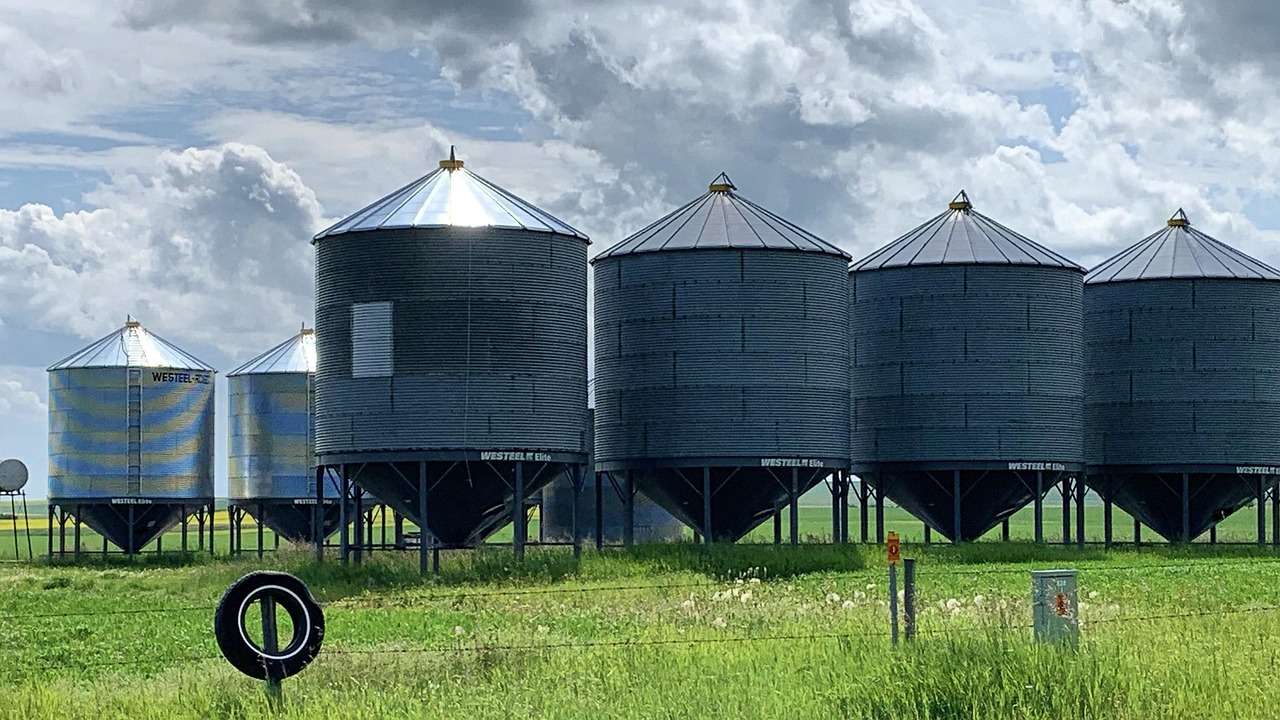
| Grain storage | Bins and silos, on-floor drying systems and grain walling |
| Crop stores | Potato and onion store ventilation, refrigeration, box tippers, graders, washers and packing lines |
| Irrigation | Pumps, hose reels, rain guns, booms, trickle systems and mains pipework |
| Spraying and spreading | Self-propelled and trailed sprayers and fertiliser spreaders |
| Precision farming | RTK guidance, section control, variable rate equipment, yield mapping and soil scanning |
| Arable machinery | Tractors, combines, drills and cultivation kit. See tractor and farm machinery finance |
| Handling and transport | Telehandlers, loading shovels and grain trailers |
Grain dryer and storage finance
A dryer that can keep up with the combine protects grain quality in a wet harvest and lets you store and sell when prices suit you, rather than at harvest.
- Dryers and handling are fundable. Lenders fund the dryer, intake, conveyors, cleaners and fans, plus the supplier’s installation, as one package.
- Longer terms are possible. A new dryer has a long working life, so some lenders will run the agreement for up to 7 years.
- The building is separate. The grain store itself is usually funded with a farm loan or mortgage, because a building is part of the land and cannot be taken back like a machine.
- Energy use. Newer dryers and heat recovery cut fuel costs, which helps when you show the lender the case for replacing an old dryer.
Potato and vegetable store finance
Store equipment lets root crop growers hold potatoes, onions and other vegetables in condition for months and supply processors and packers through the season.
- Refrigeration and ventilation. Store cooling, ambient ventilation and control systems are widely funded. See commercial refrigeration finance for more on chilled storage.
- Grading and handling. Box tippers, graders, washers, polishers and packing lines can be funded with the store kit or on their own.
- Supply contracts help. A contract to supply a processor or packer gives the lender confidence in the income the store will support.
Irrigation equipment finance
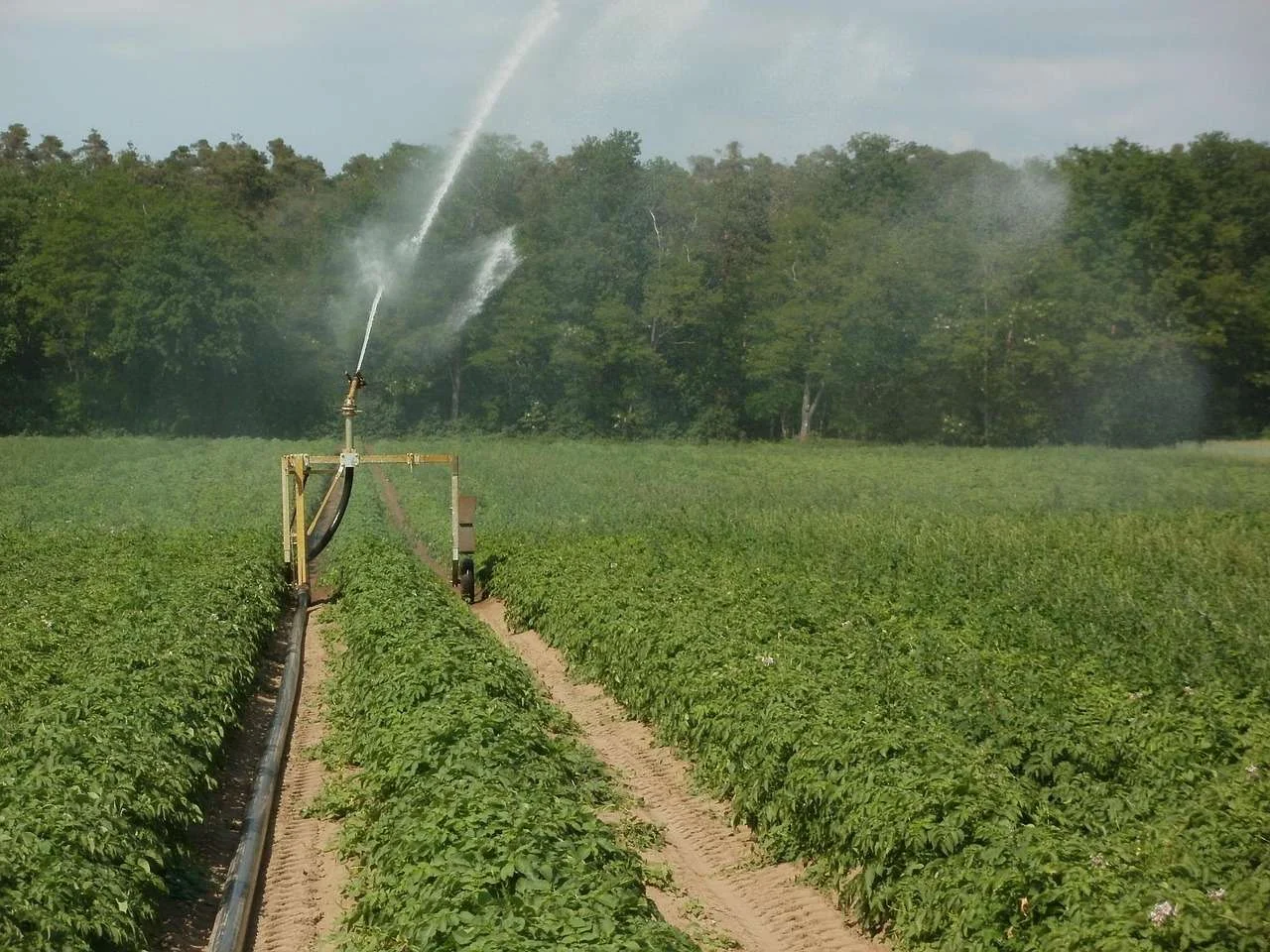
Irrigation protects yield and quality on potatoes, vegetables and other high-value crops in dry summers. Pumps, hose reels, rain guns, booms, trickle systems and pipework can all be funded, and a hose reel and gun is often funded new or used much like any other machine.
The reservoir, earthworks and borehole are usually funded separately, as they are part of the land. Lenders may ask to see that you have the abstraction licence or water supply the equipment depends on.
Precision farming equipment finance
RTK guidance, section control, variable rate application and yield mapping cut overlaps and input costs. The hardware can be funded on its own or with the tractor, sprayer or drill it is fitted to. Software subscriptions and data services are usually paid separately, because there is no physical asset for the lender to fund.
Finance options for crop farms
Most crop farms buy equipment on hire purchase. Our types of asset finance guide covers each option in more depth.
| Type | How it works | Suits |
|---|---|---|
| Hire purchase | A deposit, then fixed payments. You own the equipment after the last one | Dryers, store equipment and machinery you will keep for many years |
| Finance lease | Rentals with VAT added to each one. The lender owns the equipment | Keeping the VAT outlay down on a large installation |
| Operating lease | Lower rentals set around the expected resale value. You hand the asset back at the end | Tractors and sprayers you replace on a set cycle |
| Refinance | A lender buys equipment you own and sells it back to you over a fixed term | Raising cash for new kit or working capital |
Hire purchase for crop farms
Hire purchase is the usual route for crop farm equipment. You pay a deposit, often around 10% plus the VAT, then fixed payments, and the equipment becomes yours after the final payment and a small option fee. As the owner for tax, the farm may be able to claim capital allowances against the cost.
Seasonal and annual payments
Arable income usually arrives after harvest and as stored crops are sold. Many agricultural lenders will set seasonal, quarterly, half-yearly or annual payments, or defer the first payment so a new dryer is not costing money before its first harvest. Paying less often usually costs a little more interest overall.
Finance lease for crop farm equipment
A finance lease adds VAT to each rental instead of charging it on the full price at the start, which helps with a large dryer or store installation. The lender owns the equipment. At the end of the main term you can usually keep it on a small secondary rental.
Refinancing equipment you own
If the farm owns machinery outright, a sale and hire purchase back lets a lender buy it and sell it back to you over a fixed term, so it stays in use. It can fund a new dryer or store, or bridge the gap between drilling costs and harvest income.
VAT and tax on crop farming finance
Hire purchase means paying the VAT up front and may bring capital allowances, while leasing spreads the VAT across the rentals.
| Type | VAT | Tax treatment |
|---|---|---|
| Hire purchase | VAT on the full price is payable at the start, and a VAT-registered farm normally recovers it on its next return | The farm counts as the owner for tax, so it may be able to claim capital allowances, such as the annual investment allowance, or full expensing for companies on new equipment |
| Finance lease | VAT is charged on each rental and recovered through normal returns | Rentals are usually deductible from profits |
| Operating lease | VAT is charged on each rental | Rentals are usually deductible, and the lender takes the capital allowances |
Check with your accountant how each option fits the farm’s tax position before you commit.
Grain dryer finance costs: a worked example
A new continuous flow grain dryer with intake, conveyors and installation at £180,000 costs about £3,363 a month over 5 years on hire purchase, or about £2,606 a month over 7 years.
| Item | 5 years | 7 years |
|---|---|---|
| Price including installation (excl. VAT) | £180,000 | £180,000 |
| Deposit (10%) | £18,000 | £18,000 |
| VAT paid upfront | £36,000 | £36,000 |
| Amount financed | £162,000 | £162,000 |
| Monthly payment | £3,362.85 | £2,606.43 |
| Total interest | £39,771 | £56,940 |
The 7-year term lowers the monthly payment by about £756 but adds around £17,169 of interest. A dryer can run for 20 years or more, so the longer term still finishes well inside its working life. Payments can also be set seasonally or annually around crop sales, which changes the totals.
Illustration calculated in October 2026, assuming an interest rate of 9% a year. It is not a quote. Your rate depends on the farm’s trading history, credit profile and the equipment.
What lenders look for in crop farms
Lenders look at the usual financial documents, plus the land, the crops and how the farm sells them.
- Accounts and bank statements. The last two or three years of accounts and recent business bank statements. Lenders expect profits to vary with yields and prices, and look at the trend rather than one year.
- Land and tenure. How many acres you farm, and whether they are owned, rented on a long tenancy or on short-term arrangements. Tenure matters most for fixed equipment such as dryers and store kit.
- Cropping and sales. What you grow, and how you sell it, including any supply contracts with processors, packers or merchants.
- Other income. Environmental scheme payments, contracting work or diversification income can support an application.
- Documents. Supplier quotes, plus photo ID and address history for each director, member or partner.
- Existing finance. A list of equipment already on finance and what is left to pay.
Related guides
Who we can help
We arrange asset finance for crop farms that trade as UK limited companies and LLPs, and for sole traders and partnerships on agreements over £25,000 that are for business purposes. We are not authorised by the FCA, so we cannot arrange agreements of £25,000 or less for sole traders or partnerships of two or three partners, or finance for personal use.
Asset finance for crop farming FAQs
What can crop farms finance?
Most equipment can be financed, including grain dryers, conveyors and storage equipment, crop store refrigeration and ventilation, graders, irrigation, sprayers, precision farming kit, tractors and combines. Land, buildings and groundworks such as reservoirs are usually funded separately with a farm loan or mortgage.
Can I finance a grain dryer?
Yes. Lenders fund the dryer, intake, conveyors, cleaners and fans, plus the supplier’s installation, as one package. Because a new dryer has a long working life, some lenders will run the agreement for up to 7 years. The grain store building is usually funded separately.
Can payments be timed around harvest?
Often, yes. Many agricultural lenders offer seasonal, quarterly, half-yearly or annual payments, or a deferred first payment, so the cost lines up with crop sales. Paying less often usually costs a little more interest overall, because the balance comes down more slowly.
Can a tenant farmer finance fixed equipment?
Yes, although lenders look closely at the tenancy. A long tenancy, or the landlord’s agreement that the equipment belongs to you and can be removed, makes fixed kit such as a dryer or store refrigeration easier to fund. Mobile machinery is not affected in the same way.
Can I finance irrigation equipment?
Yes. Pumps, hose reels, rain guns, booms, trickle systems and pipework can all be funded, new or used. The reservoir, earthworks and borehole are usually funded separately, and lenders may ask to see the abstraction licence or water supply the equipment depends on.
Can precision farming equipment be financed?
Yes. RTK guidance, section control, variable rate equipment and yield mapping hardware can be funded on their own or with the machine they are fitted to. Software subscriptions and data services are usually paid separately, because there is no physical asset for the lender to fund.
Can a farming partnership get asset finance?
Yes, on business agreements over £25,000. Many crop farms trade as partnerships or sole traders, and lenders are used to working with them. Agreements of £25,000 or less for sole traders and partnerships of two or three partners are regulated, and we are not authorised by the FCA to arrange them.
Get a crop farming finance quote
Tell us what you want to finance
Send us the equipment, the price and whether it is new or used, plus how you would like payments to fall around harvest. We will come back with the options that are realistic and what they are likely to cost.
About the author
Marcus Wright is the owner and founder of Bolton Business Finance Ltd, which trades as Finance Assets. He has worked in financial services since 2008, beginning his career at Santander, and has been a commercial finance broker since March 2019.
He founded Bolton Business Finance in 2020 to give businesses access to the whole lending market rather than one bank’s own product range. The firm is a member of the National Association of Commercial Finance Brokers and works with a panel of 135+ lenders. Call 0161 546 9128.
Finance Assets is a trading name of Bolton Business Finance Ltd, an independent commercial finance brokerage, not a lender. We are not authorised by the Financial Conduct Authority and can only complete non-regulated introductions. All lending is for business purposes only. Registered address: Westgate House, 1 Westgate Avenue, Bolton, Greater Manchester, BL1 4RF. Company number 12495909.