
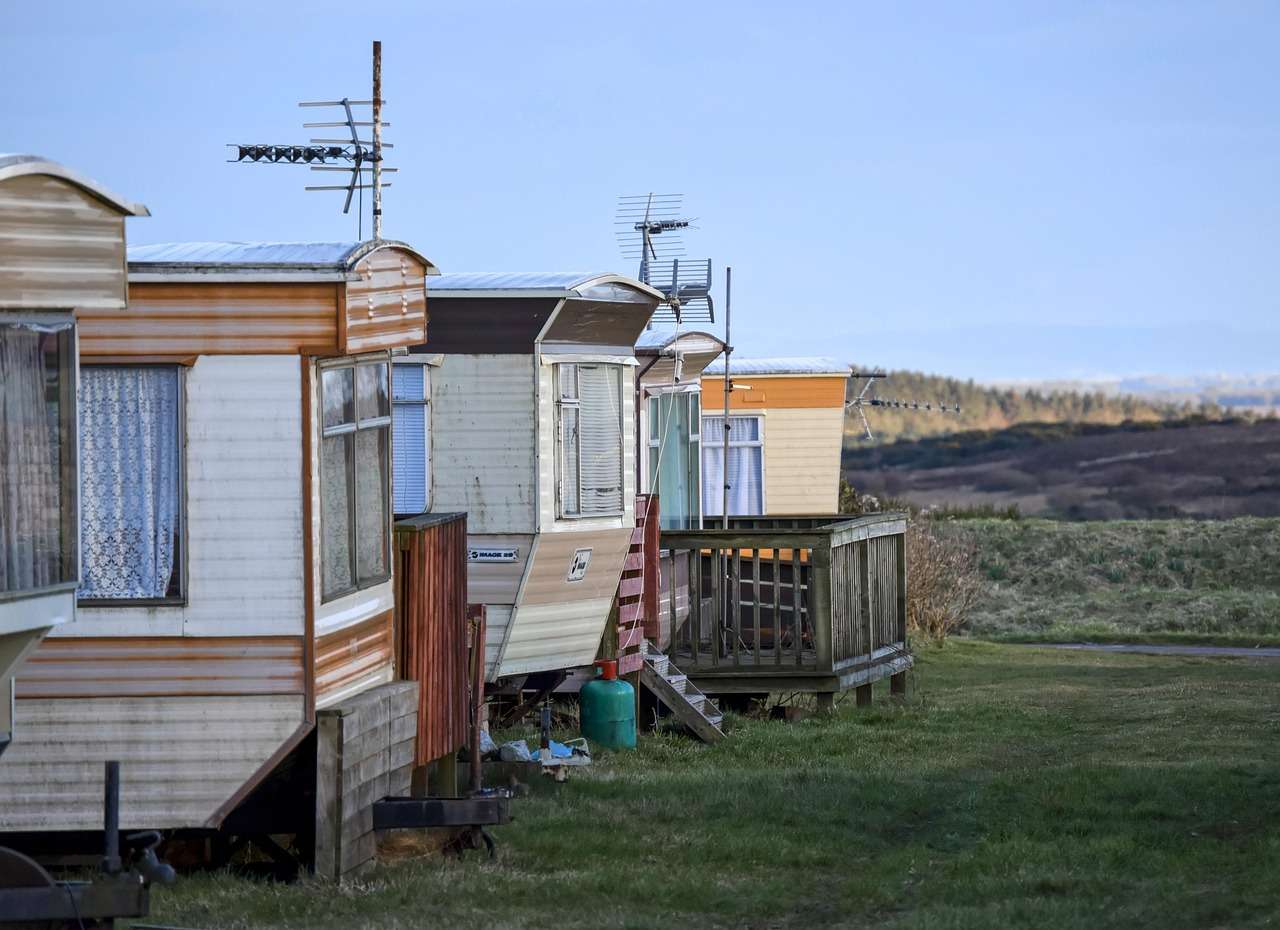
Finance Assets arranges hire purchase and leasing for holiday parks, letting businesses and glamping sites buying static caravans, holiday lodges, glamping pods and shepherd huts to let to guests.
Holiday park caravan and lodge finance spreads the cost of new or pre-owned holiday units over 3 to 7 years, so you can refresh a hire fleet, add lodges or open a glamping field without tying up working capital. We are a broker, not a lender, so we compare quotes from our lender panel rather than offering one bank’s product.
Written by Marcus Wright, founder of Bolton Business Finance Ltd, in financial services since 2008 and a commercial finance broker since 2019. Last reviewed October 2026.
Buying a holiday home for your own use? This page is for businesses that let caravans and lodges to paying guests. Finance for a caravan or lodge you will use yourself is regulated consumer credit, which we are not authorised to arrange. The park selling the unit, or an FCA-authorised lender, can help with that.
On this page
The short version
- Holiday caravan and lodge finance usually runs over 3 to 7 years.
- It is for businesses that let units to guests, not for buying a holiday home for personal use.
- Lenders look at the park’s site licence and planning, and for letting businesses the pitch licence agreement.
- Delivery, siting, connections, steps and decking can often be partly included with the unit.
- Finance Assets arranges this finance for limited companies and LLPs, and for sole traders and partnerships on agreements over £25,000.
| Item | Detail |
|---|---|
| Units covered | Static caravans, holiday lodges, glamping pods, shepherd huts, safari tents and cabins let to guests |
| Terms | Usually 3 to 7 years, depending on the unit and its age |
| Paid upfront | Leases: usually 1 to 3 rentals in advance. Hire purchase: often a 10% deposit plus any VAT |
| New or used | New and pre-owned. Lenders look at the unit’s age against the term and any park age limit |
| Extra costs | Delivery, craning, siting, service connections, skirting, steps and decking can often be partly included |
| Who we help | Limited companies and LLPs, plus sole traders and partnerships on business agreements over £25,000 |
Who holiday caravan and lodge finance is for
Lenders fund holiday units that earn income from guests. That usually means one of three types of business.
- Park operators buying units for their own hire fleet, or refreshing older stock.
- Letting businesses that own caravans or lodges on someone else’s park and let them to holidaymakers.
- Farms, estates and glamping sites adding pods, huts or lodges, often as a diversification project.
If you are buying a unit to use as your own holiday home, even if you let it occasionally, the finance is usually treated as personal borrowing. That is not something we can arrange.
Holiday units we finance
Each type of unit is covered in its own section below. A mix of units, plus the siting work, can go on one agreement.
| Unit | Typical buyers | Typical term |
|---|---|---|
| Static caravans | Holiday parks and letting businesses | 3 to 5 years (newer units up to 7) |
| Holiday lodges | Lodge parks, holiday parks and estates | 5 to 7 years, sometimes longer |
| Glamping pods, huts and tents | Glamping sites, farms and campsites | 3 to 5 years |
Static caravan finance for holiday letting
Static caravans make up most hire fleets on UK holiday parks. Lenders understand them well because there is an established market for pre-owned units.
- New and pre-owned. Both can be funded. For older units, lenders usually want the finance to end well before the unit reaches the age at which the park would expect it to be replaced.
- Siting costs. Delivery, craning, positioning, gas, water, drainage and electrical connections, skirting and steps can often be partly included alongside the caravan.
- Decking and extras. Decking, furniture packs and hot tubs that come with the unit can sometimes be added, though lenders fund the caravan itself most readily.
- Specification. Holiday caravans built for year-round letting, with central heating and double glazing, can support higher occupancy and longer letting seasons.
We regularly see units from Willerby, Pemberton, Atlas, Victory, Prestige and Omar.
Holiday lodge finance
Holiday lodges are larger, higher-specification units, usually twin-unit or timber-clad, that command higher nightly rates than standard caravans.
- Longer terms. Because lodges cost more and last longer, terms of 5 to 7 years are common, and sometimes longer for high-specification units.
- Hot tub lodges. Hot tubs, decking and outdoor kitchens that boost booking rates can be included with the lodge.
- Movable units only. Asset finance works for lodges that can legally be moved as caravans. A lodge built as a permanent structure on foundations is property, and is usually funded with a commercial mortgage instead.

Glamping pod, shepherd hut and safari tent finance
Glamping units are a popular way for farms, estates and campsites to add higher-value accommodation without the cost of a full lodge park.
- What is covered. Insulated pods, shepherd huts, safari tents, yurts, cabins and the wash blocks that serve them.
- Bundling. Several pods or huts, plus wash and kitchen units, can go on one agreement to reach lender minimums.
- Planning. Lenders want to see that the site has the planning permission and licensing it needs before units arrive.
- New sites. A new glamping business without trading history may need a stronger application, such as an established farm business behind it, a larger deposit or a director’s guarantee.

Finance for holiday park operators
Park operators often fund a hire fleet in stages, adding or replacing units each season.
- Fleet refresh. Replacing older hire units in batches, with serial numbers listed on each agreement, keeps payments in line with what each unit earns.
- Booking data. Occupancy and average nightly rates from your booking system help lenders see how new units will pay for themselves.
- Seasonal payments. Parks that close for part of the year can sometimes have payments weighted towards the open season.
- Refinancing. Units you already own outright can sometimes be refinanced to release cash for new stock or park improvements.
- Site licence and planning. Lenders check the park has a valid site licence and planning consent covering the number and type of units.
New pitches, roads, utilities and buildings are part of the land, not movable assets. They are usually funded with a commercial mortgage or development finance, which we can also arrange. Park equipment such as grounds care machinery and guest laundries can be funded alongside the units; see our laundry equipment finance guide.
Finance for caravan and lodge letting businesses
Some businesses own units on a park run by someone else and let them to holidaymakers. Lenders can fund this, but they look closely at the arrangement with the park.
- Letting must be allowed. Many parks do not allow private letting, or only allow it through their own letting scheme. Check the pitch licence agreement before you buy.
- Pitch agreement length. Lenders want the pitch licence to run at least as long as the finance.
- Pitch fees. Annual pitch fees, rates and utilities come on top of the finance payment, so include them when working out what a unit will earn.
- Business structure. We can help limited companies and LLPs at any size, and sole traders and partnerships on agreements over £25,000.
Leasing and hire purchase compared
Hire purchase is the most common choice, because most parks and letting businesses want to own their units and sell them on later. Our types of asset finance guide covers each option in more depth.
| Option | How it works | Best for |
|---|---|---|
| Hire purchase | You pay a deposit and fixed monthly payments, and own the unit after the final payment and any option fee | Caravans and lodges you plan to keep and later sell |
| Finance lease | You rent the unit for most of its working life. At the end you extend at a low rent, or sell it for the lender and keep most of the proceeds | Spreading VAT and keeping upfront costs low |
| Operating lease | You rent the unit for part of its life, then hand it back or replace it | Large operators refreshing hire fleets on a fixed cycle |
Hire purchase for static caravans and lodges
You pay a deposit, usually 10%, then fixed monthly payments, and ownership passes to you after the final payment and a small option-to-purchase fee. As the owner for tax purposes, the business may be able to claim capital allowances on the unit.
Finance lease for static caravans and lodges
A finance lease keeps the upfront cost to a few rentals, and any VAT is spread across the rentals rather than paid at the start. The lender owns the unit throughout. At the end of the main term you can keep using it for a low secondary rent, or sell it on the lender’s behalf and receive most of the sale proceeds.
Operating lease for static caravans and lodges
An operating lease sets the rentals against what the unit is expected to be worth at the end of the term, so the lender carries the resale risk. It is less common for holiday units, but can suit larger operators that replace hire stock on a fixed cycle.
Holiday caravan finance costs: a worked example
A park adding four new hire caravans at £180,000 including siting pays about £3,363 a month on a 5-year hire purchase, or about £2,606 a month over 7 years.
| Item | 5 years | 7 years |
|---|---|---|
| Price (excl. VAT) | £180,000 | £180,000 |
| Deposit (10%) | £18,000 | £18,000 |
| Monthly payment | £3,362.85 | £2,606.43 |
| Total interest | £39,771 | £56,940 |
The longer term lowers the monthly payment by about £756 but adds around £17,169 of interest. Compare the payment with what the units will earn across a season, after pitch costs and running costs.
Illustration calculated in October 2026, assuming an interest rate of 9% a year. It is not a quote, and any VAT is not included. Your rate depends on your trading history, credit profile and the units.
VAT and tax on holiday caravan and lodge finance
VAT on caravans depends on how they are built. Units built to the BS 3632 residential standard can be zero-rated, while most holiday-specification caravans and lodges are standard-rated. Glamping pods and huts are usually standard-rated. Confirm the treatment with the supplier and your accountant.
| Option | VAT | Usual tax treatment |
|---|---|---|
| Hire purchase | Any VAT is paid on the full price at the start, reclaimable if you are VAT registered | You may be able to claim capital allowances, and the interest is deductible |
| Finance lease | Added to each rental where VAT applies | Rentals are usually deductible |
| Operating lease | Added to each rental where VAT applies | Rentals are usually deductible |
Holiday letting businesses have their own tax rules. Ask your accountant how financed units fit with yours.
What lenders ask for
Most holiday caravan and lodge finance applications need the following.
- Your last 2 years of filed accounts, or management accounts and a forecast if you are newer
- Your last 3 to 6 months of business bank statements
- A quote for each unit showing the make, model, year, serial number and siting costs
- For park operators, the site licence and planning consent. For letting businesses, the pitch licence agreement
- Occupancy and booking figures, or a booking forecast for new sites
- Photo ID and address history for each director, member or partner
Related guides
- Site accommodation and staff housing finance, for caravans and units used to house workers
- Portable cabin and modular building finance
- Laundry equipment finance
- Catering equipment finance
- All sectors we finance
- Types of asset finance
Who we can help
We arrange holiday caravan and lodge finance for UK limited companies and LLPs, and for sole traders and partnerships on agreements over £25,000 that are for business purposes. We are not authorised by the FCA, so we cannot arrange agreements of £25,000 or less for sole traders or partnerships of two or three partners, or finance for a caravan or lodge for personal use.
Holiday caravan and lodge finance FAQs
Can you finance a static caravan for my own holidays?
No. Finance for a caravan or lodge you will use yourself is regulated consumer credit, which we are not authorised to arrange. The park selling the unit, or an FCA-authorised lender, can help with that.
Can I finance a static caravan to rent out?
Yes, if it is run as a letting business. We can help limited companies and LLPs, and sole traders and partnerships on agreements over £25,000. The park must allow letting, and lenders want the pitch licence to last at least as long as the finance.
How much does it cost to finance holiday caravans?
It depends on the units, the term and your business. As an illustration, £180,000 of hire caravans costs about £3,363 a month over 5 years on hire purchase at 9%, after a 10% deposit, or about £2,606 a month over 7 years.
Can pre-owned caravans be financed?
Yes. Lenders look at the unit’s age and condition, and usually want the finance to end well before the unit reaches the age at which the park would expect it to be replaced.
Can siting costs be included?
Often, in part. Delivery, craning, connections, skirting and steps can usually be added alongside the unit. New pitches, roads and utilities are part of the land and are usually funded with a commercial mortgage or development finance instead.
Can you finance glamping pods and shepherd huts?
Yes. Pods, huts, safari tents and wash blocks can be funded together. Lenders want to see the planning and licensing for the site, and newer businesses may need a larger deposit or a guarantee.
Get a holiday caravan and lodge finance quote
Tell us what you want to finance
Send us the units, the price and a few details about your park or letting business. We will come back with the options that are realistic and what they are likely to cost.
About the author
Marcus Wright is the owner and founder of Bolton Business Finance Ltd, which trades as Finance Assets. He has worked in financial services since 2008, beginning his career at Santander, and has been a commercial finance broker since March 2019.
He founded Bolton Business Finance in 2020 to give businesses access to the whole lending market rather than one bank’s own product range. The firm is a member of the National Association of Commercial Finance Brokers and works with a panel of 135+ lenders. Call 0161 546 9128.
Finance Assets is a trading name of Bolton Business Finance Ltd, an independent commercial finance brokerage, not a lender. We are not authorised by the Financial Conduct Authority and can only complete non-regulated introductions. All lending is for business purposes only. Registered address: Westgate House, 1 Westgate Avenue, Bolton, Greater Manchester, BL1 4RF. Company number 12495909.