
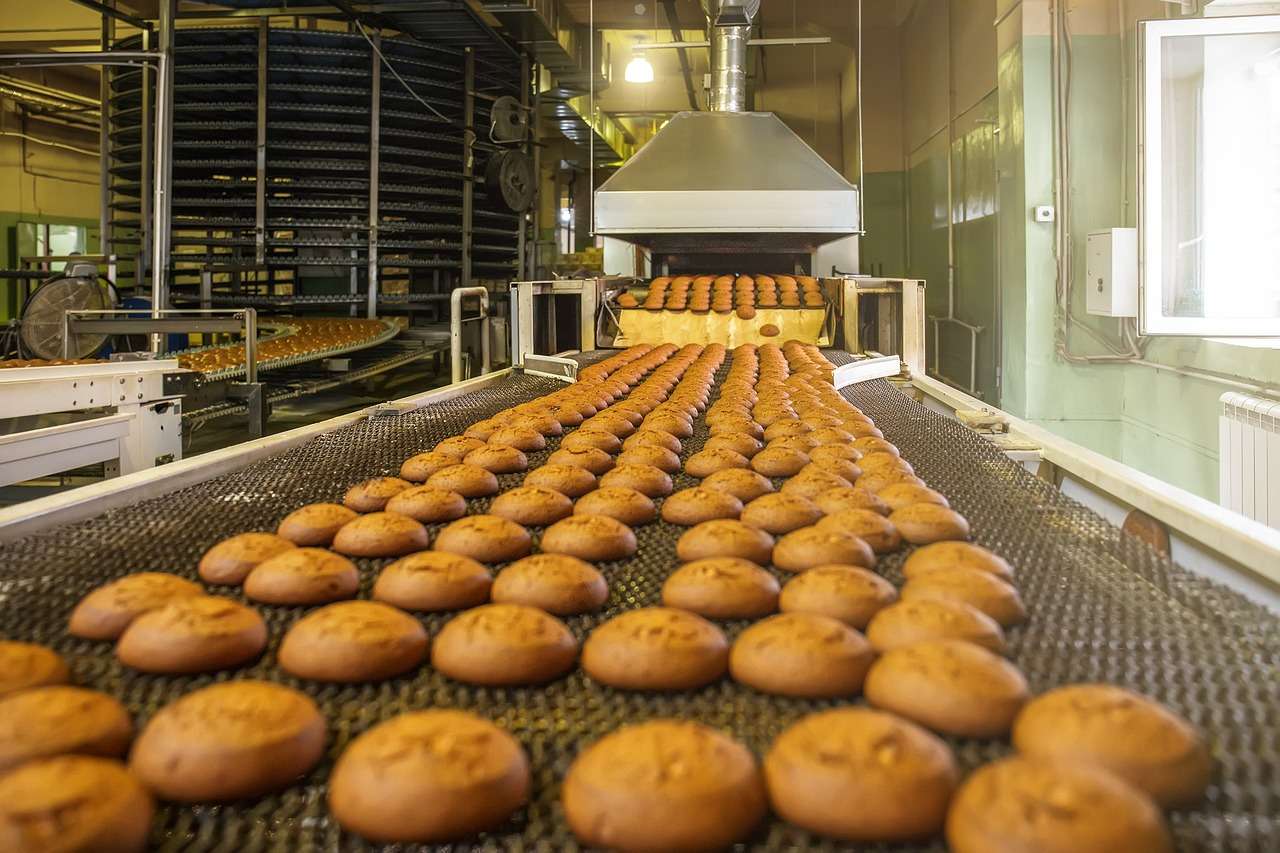
Finance Assets arranges food manufacturing equipment finance for UK businesses buying industrial ovens, mixers and processing machines, forming and depositing equipment, spiral freezers and inspection systems, new or used.
Food manufacturing equipment finance spreads the cost of production equipment over 3 to 7 years, so a bakery, meat processor, ready meals maker or snack producer can add a line, win a new retail contract or replace ageing ovens without a large cash outlay. We arrange hire purchase and leasing for single machines and complete lines, including installation. For filling, wrapping and end-of-line equipment, see our packaging machinery finance guide.
Written by Marcus Wright, founder of Bolton Business Finance Ltd, in financial services since 2008 and a commercial finance broker since 2019. Last reviewed October 2026.
On this page
The short version
- Food manufacturing equipment finance spreads the cost of ovens, processing machines and complete lines over 3 to 7 years.
- A line built from several makers can go on one agreement, along with installation and commissioning.
- Stainless steel food equipment from established makers holds its value, so used machines are widely funded.
- Lenders look closely at how much of your turnover comes from one retailer or customer.
- Finance Assets arranges food manufacturing equipment finance for limited companies and LLPs, and for sole traders and partnerships on agreements over £25,000.
| Item | Detail |
|---|---|
| Equipment covered | Industrial ovens, mixers, processing, forming and depositing machines, chilling and freezing, and inspection equipment |
| Deal sizes | From a single mixer or slicer to a complete production line |
| Terms | Usually 3 to 5 years on used equipment, and up to 7 years on new lines and ovens |
| Paid upfront | Hire purchase: often a 10% deposit plus VAT. Leases: usually 1 to 3 rentals in advance |
| New or used | Both, from UK and overseas makers, dealers and auctions |
| Who we help | Limited companies and LLPs, plus sole traders and partnerships on business agreements over £25,000 |
Food manufacturing equipment we finance
Lenders will fund most food production equipment, provided it comes from an identifiable maker or dealer on a clear, itemised quote.
| Equipment group | Examples |
|---|---|
| Preparation and processing | Spiral and planetary mixers, bowl choppers, mincers, slicers, dicers, peelers and tumblers |
| Industrial ovens and cooking | Tunnel, rack and deck ovens, provers, industrial fryers, steam kettles, cook tanks and smokehouses |
| Industrial microwaves | Microwave tempering and thawing tunnels for frozen meat, fish and butter blocks, and microwave cooking, pasteurising and drying systems |
| Forming and depositing | Dough dividers and moulders, formers, depositors, enrobers and food extruders |
| Chilling and freezing | Spiral freezers, blast chillers, tunnel freezers and cooling conveyors |
| Inspection and weighing | Metal detectors, X-ray inspection, checkweighers and multihead weighers |
Industrial microwave systems are mostly bought by meat, fish and ready meal producers to temper frozen blocks in minutes rather than days in a chiller. They are usually built and installed by a specialist supplier, so lenders look at the quote, the installation costs and how the system fits your line. Some systems are also used for drying and heating outside the food industry, and lenders fund those on the same basis.
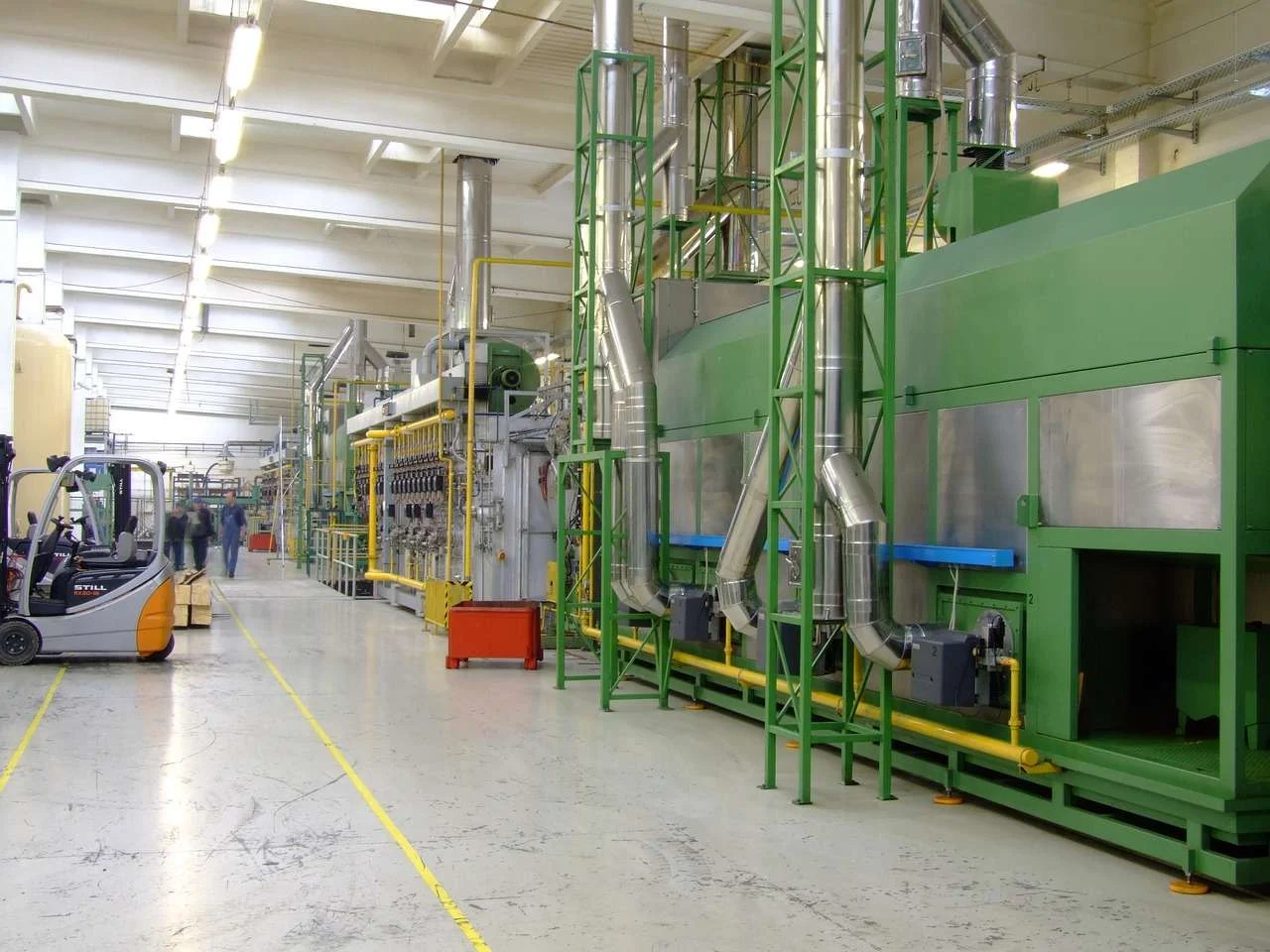
Lines, ovens and hygiene
A few points about food production equipment change how lenders look at it.
- Lines from several makers. A production line often combines a mixer from one maker, an oven from another and a freezer from a third. These can go on one agreement, with each machine listed on the schedule.
- Installing ovens and freezers. Tunnel ovens and spiral freezers need extraction, gas or power upgrades and specialist installers. Installation and commissioning can usually be included as long as equipment makes up most of the cost.
- Hygiene and certification. Many sites work to BRCGS or SALSA standards. Lenders favour hygienic-design stainless steel equipment from known makers, as it is easier to resell to other food producers.
- Retail contracts. A new supermarket or food service contract is often the reason for buying. Lenders may ask to see the contract, and will weigh up how much depends on that one customer.
Finance options for food manufacturing equipment
Most food producers buy ovens and core processing machines on hire purchase, as they run for many years. Our types of asset finance guide covers each option in more depth.
| Type | How it works | Suits |
|---|---|---|
| Hire purchase | A deposit, then fixed monthly payments. You own the equipment after the last one | Ovens, mixers and lines you will run for many years |
| Finance lease | Rentals with VAT added to each one. The lender owns the equipment | Spreading the VAT on a large oven or complete line |
| Operating lease | Lower rentals set around the equipment’s expected resale value. Hand back at the end | Equipment tied to a fixed-length product contract |
| Type | VAT | Tax treatment |
|---|---|---|
| Hire purchase | VAT on the full price is paid at the start, and a VAT-registered business usually reclaims it on its next return | The business is treated as the owner, so it may be able to claim capital allowances, such as the annual investment allowance, or full expensing for companies buying new equipment |
| Finance lease | VAT is added to each rental and reclaimed as normal | Rentals are usually deductible as a business expense |
| Operating lease | VAT is added to each rental | Rentals are usually deductible, and the lender claims the capital allowances |
Your accountant can confirm how each option works for your tax position.
Hire purchase for food manufacturing equipment
Hire purchase for food manufacturing equipment suits a producer that will run its machines for many years. You pay a deposit, often around 10% plus the VAT, then fixed monthly payments, and the equipment becomes yours after the final payment and a small option fee. New lines can often be spread over up to 7 years to keep payments in line with contract income.
Finance lease for industrial ovens
A finance lease for industrial ovens spreads the VAT across the rentals, which helps when a tunnel or rack oven, provers and installation all arrive at once. The lender owns the oven, and at the end you can usually carry on at a small secondary rental, or sell it for the lender and keep most of the proceeds. Hire purchase for industrial ovens works the same way as for other food equipment above.
Operating lease for food manufacturing equipment
An operating lease for food manufacturing equipment suits a producer whose equipment is tied to a product or contract with a fixed life. The rentals are set around what the equipment should be worth at the end, so they are lower than a finance lease, and you hand it back or upgrade when the lease ends. Operating leases for industrial ovens are available on the same basis.
Food manufacturing equipment finance costs: a worked example
An industrial bakery line with a spiral mixer, divider and moulder, rack oven, provers and installation at £220,000 costs about £4,110 a month on a 5-year hire purchase, or about £3,186 a month over 7 years.
| Item | 5 years | 7 years |
|---|---|---|
| Price (excl. VAT) | £220,000 | £220,000 |
| Deposit (10%) | £22,000 | £22,000 |
| VAT paid upfront | £44,000 | £44,000 |
| Monthly payment | £4,110.15 | £3,185.64 |
| Total interest | £48,609 | £69,594 |
The longer term lowers the monthly payment by about £925 but adds around £20,985 of interest.
Illustration calculated in October 2026, assuming an interest rate of 9% a year. It is not a quote. Your rate depends on your trading history, credit profile and the equipment.
What lenders look for in food manufacturing equipment finance applications
Lenders look at the usual financial documents, plus a clear quote and who you sell to.
- Accounts and bank statements. The last two years of accounts, recent management accounts and three to six months of business bank statements.
- Supplier quote. An itemised quote, showing each machine, installation and commissioning separately on a line from several makers.
- Customers and contracts. Who you supply, whether retailers, food service, wholesalers or other manufacturers, and any contract the new equipment is for.
- Owner or director history. Lenders check the credit records of the directors, partners or owner, and may ask for personal guarantees on newer businesses or larger lines.
Related guides
- Packaging machinery finance, for filling, wrapping and end-of-line equipment
- Commercial refrigeration finance, including cold rooms
- Brewery and drinks equipment finance
- Catering equipment finance
- All food, drink and catering finance
- All manufacturing equipment finance
- Types of asset finance
Who we can help
We arrange food manufacturing equipment finance for UK limited companies and LLPs, and for sole traders and partnerships on agreements over £25,000 that are for business purposes. We are not authorised by the FCA, so we cannot arrange agreements of £25,000 or less for sole traders or partnerships of two or three partners, or finance for personal use.
Food manufacturing equipment finance FAQs
Can I finance food manufacturing equipment?
Yes. Lenders fund ovens, mixers, processing, forming and freezing equipment, and inspection systems, new or used. As an illustration, a £220,000 bakery line costs about £4,110 a month over 5 years on hire purchase at 9%, after a 10% deposit and the VAT paid upfront.
Can I finance an industrial oven?
Yes. Tunnel, rack and deck ovens, provers and industrial fryers are widely funded on hire purchase, finance lease or operating lease. Gas or power upgrades, extraction and installation can usually go on the same agreement, as long as the oven makes up most of the cost.
Can I finance used food processing equipment?
Yes. Used stainless steel equipment from established makers is widely funded, whether bought from a dealer, at auction or from another producer. Lenders look at the age, condition and maker, and may ask for photos or an inspection. Overhaul and reinstallation can usually be included.
Does relying on one supermarket affect finance?
It can. Lenders weigh up how much of your turnover comes from one customer. Heavy reliance on one retailer does not rule out finance, but the lender may want to see the contract, a longer trading record or a larger deposit.
Can a complete production line go on one agreement?
Yes. A line from several makers, along with conveyors, installation and commissioning, can usually go on one agreement. Each machine is listed on the schedule, and lenders will sometimes release stage payments to suppliers while the line is built.
Can I raise cash against food equipment I already own?
Yes. Through a sale and hire purchase back, a lender buys equipment you own outright and sells it back to you over a fixed term, so production carries on. The amount depends on the equipment’s value, age and condition. Producers use it to fund a new line, a site move or working capital.
Get a food manufacturing equipment finance quote
Tell us about the equipment
Send us the supplier quote and a few details about your business. We will come back with the options that are realistic and what they are likely to cost.
About the author
Marcus Wright is the owner and founder of Bolton Business Finance Ltd, which trades as Finance Assets. He has worked in financial services since 2008, beginning his career at Santander, and has been a commercial finance broker since March 2019.
He founded Bolton Business Finance in 2020 to give businesses access to the whole lending market rather than one bank’s own product range. The firm is a member of the National Association of Commercial Finance Brokers and works with a panel of 135+ lenders. Call 0161 546 9128.
Finance Assets is a trading name of Bolton Business Finance Ltd, an independent commercial finance brokerage, not a lender. We are not authorised by the Financial Conduct Authority and can only complete non-regulated introductions. All lending is for business purposes only. Registered address: Westgate House, 1 Westgate Avenue, Bolton, Greater Manchester, BL1 4RF. Company number 12495909.