
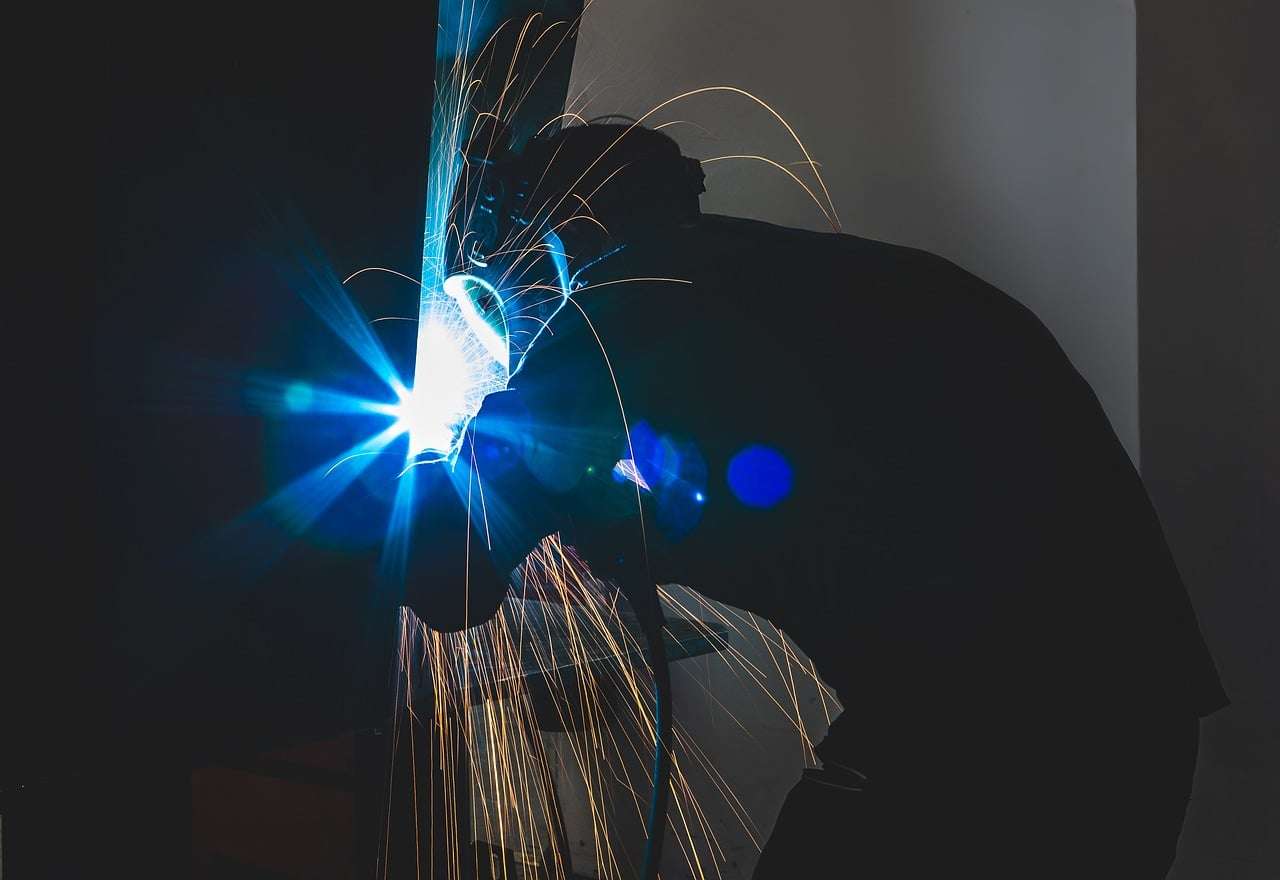
Finance Assets arranges hire purchase and leasing for UK businesses buying new or used welding machines, from MIG and TIG sets to robotic welding cells.
Welding machine finance spreads the cost of welding equipment over 2 to 5 years, so a fabricator, engineering firm or site contractor can add capacity or automate production without a large cash outlay. We are a broker, not a lender, so we compare quotes from our lender panel rather than offering one bank’s product.
Written by Marcus Wright, founder of Bolton Business Finance Ltd, in financial services since 2008 and a commercial finance broker since 2019. Last reviewed October 2026.
On this page
The short version
- Welding machine finance lets a business spread the cost of welding equipment over 2 to 5 years.
- With hire purchase, the business owns the equipment after the final payment.
- Finance and operating leases keep upfront costs lower, but the equipment stays with the lender.
- A whole workshop of welding sets, extraction and positioners can go on one agreement, and robotic cells can include jigs, guarding and programming.
- Finance Assets arranges welding machine finance for limited companies and LLPs, and for sole traders and partnerships on agreements over £25,000.
| Item | Detail |
|---|---|
| Equipment covered | MIG, TIG and MMA welders, spot and stud welders, welder generators, robotic welding cells, laser and orbital welders, and ancillary equipment |
| Terms | Usually 2 to 5 years, and up to 6 years for new robotic cells |
| Paid upfront | Hire purchase: often a 10% deposit plus VAT. Leases: usually 1 to 3 rentals in advance |
| New or used | Both. Used welding robots from established brands are widely funded |
| Extra costs | Fume extraction, positioners, jigs, guarding, programming and training can often be included |
| Who we help | Limited companies and LLPs, plus sole traders and partnerships on business agreements over £25,000 |
Welding equipment we finance
Lenders will fund most welding equipment used in a business, as long as it comes from an identifiable supplier on a clear quote.
| Equipment group | Examples |
|---|---|
| Arc welding sets | MIG/MAG, TIG, MMA (stick) and multi-process inverter welders, including pulsed and synergic sets |
| Resistance welding | Spot welders, seam welders, projection welders and stud welding systems |
| Site welding | Engine-driven welder generators, pipe welding equipment and orbital welders |
| Automated welding | Robotic welding cells, collaborative welding robots (cobots), laser welders and submerged arc systems |
| Ancillary equipment | Fume extraction (LEV), welding positioners, column and boom manipulators, welding tables and fixtures |
We regularly see equipment from manufacturers such as Lincoln Electric, ESAB, Kemppi, Fronius and Miller, and robots from Fanuc, ABB, Yaskawa and KUKA. For the other fabrication and machine tool equipment we fund, see manufacturing equipment finance.
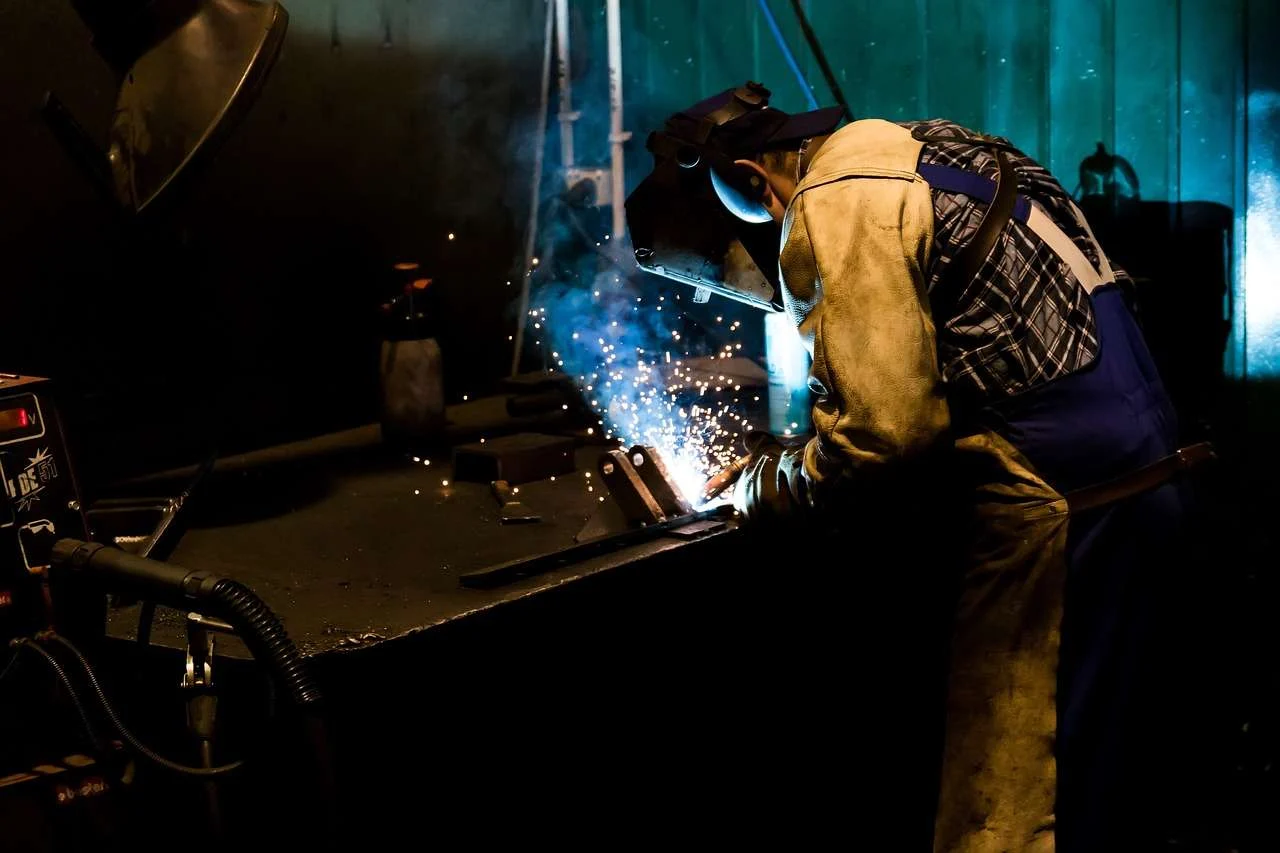
Robotic welding cell finance
A robotic welding cell is usually supplied by an integrator, combining a robot from one manufacturer with a power source, positioner, guarding and jigs built for your parts. Lenders are comfortable funding the whole cell on one agreement.
- The robot and power source hold their value, as they can be redeployed in another cell. This is what lenders mainly lend against.
- Jigs, fixtures and programming are made for your parts and have little resale value. Most lenders will still include them, usually up to a set share of the total.
- Cobots cost less than a full cell and are often funded on shorter terms, which suits smaller fabricators automating for the first time.
- Staged payments to the integrator, such as a deposit on order and a balance on commissioning, can often be handled by the lender.
What lenders look at on welding equipment
- Deal size. A single welding set is often below a lender’s minimum deal size. Putting several sets, extraction and positioners on one agreement usually makes more sense, and gives better terms.
- Brand and resale. Equipment from established manufacturers is easier to fund, especially when used.
- Fume extraction. Local exhaust ventilation is a legal requirement for most welding, and lenders will fund it alongside the welders.
- Site equipment. Welder generators and orbital welders used on site are treated like other mobile plant, so lenders may ask where the equipment will be kept and how it is secured.
- Order book. For a robotic cell, lenders may ask what work the cell is being bought for, particularly if one customer accounts for most of it.
Hire purchase, finance lease and operating lease compared
Hire purchase suits welding equipment you will keep for most of its working life. A lease suits you better if you would rather not own it, or plan to upgrade. Our types of asset finance guide covers each option in more depth.
| Option | How it works | Best for |
|---|---|---|
| Hire purchase | You pay a deposit and fixed monthly payments, and own the equipment after the final payment and any option fee | Welding sets and robots you will run for many years |
| Finance lease | You rent the equipment for most of its working life. At the end you extend at a low rent, or sell it for the lender and keep most of the proceeds | Equipping a whole workshop while spreading the VAT |
| Operating lease | You rent the equipment for part of its life, then hand it back or upgrade. Mostly available on robots and established brands | Robotic cells you expect to update as products change |
Hire purchase for welding machines
Hire purchase is the usual choice for welding machines you plan to keep. You pay a deposit, usually 10% plus the VAT, then fixed monthly payments, and ownership passes to you after the final payment and a small option-to-purchase fee. As the owner for tax purposes, the business may be able to claim capital allowances on the equipment.
Finance lease for welding machines
A finance lease keeps the upfront cost to a few rentals, and VAT is spread across the rentals rather than paid at the start. The lender owns the equipment throughout. At the end of the main term you can keep using it for a low secondary rent, or sell it on the lender’s behalf and receive most of the sale proceeds.
Operating lease for welding machines
An operating lease sets the rentals against what the equipment is expected to be worth at the end of the term, so the lender carries the resale risk. It is most often available on welding robots from the major manufacturers, which have an active second-hand market. At the end you hand the equipment back, extend the lease or upgrade.
Welding machine finance costs: a worked example
An £85,000 robotic welding cell, including the robot, power source, positioner, guarding, jigs and programming, costs about £1,904 a month on a 4-year hire purchase, or about £1,588 a month over 5 years.
| Item | 4 years | 5 years |
|---|---|---|
| Price (excl. VAT) | £85,000 | £85,000 |
| Deposit (10%) | £8,500 | £8,500 |
| VAT paid upfront | £17,000 | £17,000 |
| Monthly payment | £1,903.71 | £1,588.01 |
| Total interest | £14,878 | £18,781 |
The longer term lowers the monthly payment by about £316 but adds around £3,903 of interest. Many lenders will also defer the VAT for a few months.
Illustration calculated in October 2026, assuming an interest rate of 9% a year. It is not a quote. Your rate depends on your trading history, credit profile and the equipment.
VAT and tax on welding machine finance
| Option | VAT | Usual tax treatment |
|---|---|---|
| Hire purchase | Paid on the full price at the start, reclaimable if you are VAT registered | You may be able to claim capital allowances, such as the Annual Investment Allowance, and the interest is deductible |
| Finance lease | Added to each rental | Rentals are usually deductible |
| Operating lease | Added to each rental | Rentals are usually deductible |
Tax depends on your circumstances, so check the treatment with your accountant.
What lenders ask for
Most welding machine finance applications need the following.
- Your last 2 years of filed accounts, or management accounts and a forecast if you are newer
- Your last 3 to 6 months of business bank statements
- A quote from the supplier or integrator, showing equipment, jigs, installation and programming separately
- Photo ID and address history for each director
- Details of any existing finance agreements
Related guides
- Metal fabrication equipment finance, including press brakes and plate processing
- Laser cutting machine finance
- Production line and automation finance, including robots
- Milling machine finance
- EDM machine finance
- All manufacturing equipment finance
- Types of asset finance
Who we can help
We arrange welding machine finance for UK limited companies and LLPs, and for sole traders and partnerships on agreements over £25,000 that are for business purposes. We are not authorised by the FCA, so we cannot arrange agreements of £25,000 or less for sole traders or partnerships of two or three partners, or finance for personal use.
Welding machine finance FAQs
Can I finance a single welding machine?
Sometimes, but a single welding set is often below a lender’s minimum deal size. It usually works better to put several sets, fume extraction and positioners on one agreement. We can help limited companies and LLPs at most sizes, and sole traders and partnerships on agreements over £25,000.
How much does it cost to finance a robotic welding cell?
It depends on the cell, the term and your business. As an illustration, an £85,000 robotic welding cell costs about £1,904 a month over 4 years on hire purchase at 9%, after a 10% deposit and the VAT paid upfront, or about £1,588 a month over 5 years.
Can I finance a used welding robot?
Yes. Used welding robots from the major manufacturers have an active second-hand market, so many lenders will fund them, particularly through dealers and integrators who refurbish and warranty them. Lenders cap the age of the robot at the end of the agreement, so an older robot may get a shorter term.
Can jigs, programming and fume extraction be included?
Usually, yes. Most lenders will include jigs, fixtures, guarding, programming, installation and fume extraction alongside the welding equipment, usually up to a set share of the total. Consumables such as wire, gas and tips are paid for separately as a running cost.
Is it better to lease or buy welding equipment?
Hire purchase usually works out better for welding sets you will keep for many years, because you own them at the end and may be able to claim capital allowances. A lease can suit a robotic cell you expect to change as your products change, or a business that wants to spread the VAT. Finance Assets compares both options for each deal.
Can a new fabrication business get welding equipment finance?
Yes, although lenders look more closely at newer companies. They may ask for a larger deposit, a personal guarantee from the directors, or evidence of the work the equipment will be used for. Directors with a background in fabrication and a clear customer base both help.
Get a welding machine finance quote
Tell us what you want to finance
Send us the equipment, the price and a few details about your business. We will come back with the options that are realistic and what they are likely to cost.
About the author
Marcus Wright is the owner and founder of Bolton Business Finance Ltd, which trades as Finance Assets. He has worked in financial services since 2008, beginning his career at Santander, and has been a commercial finance broker since March 2019.
He founded Bolton Business Finance in 2020 to give businesses access to the whole lending market rather than one bank’s own product range. The firm is a member of the National Association of Commercial Finance Brokers and works with a panel of 135+ lenders. Call 0161 546 9128.
Finance Assets is a trading name of Bolton Business Finance Ltd, an independent commercial finance brokerage, not a lender. We are not authorised by the Financial Conduct Authority and can only complete non-regulated introductions. All lending is for business purposes only. Registered address: Westgate House, 1 Westgate Avenue, Bolton, Greater Manchester, BL1 4RF. Company number 12495909.