
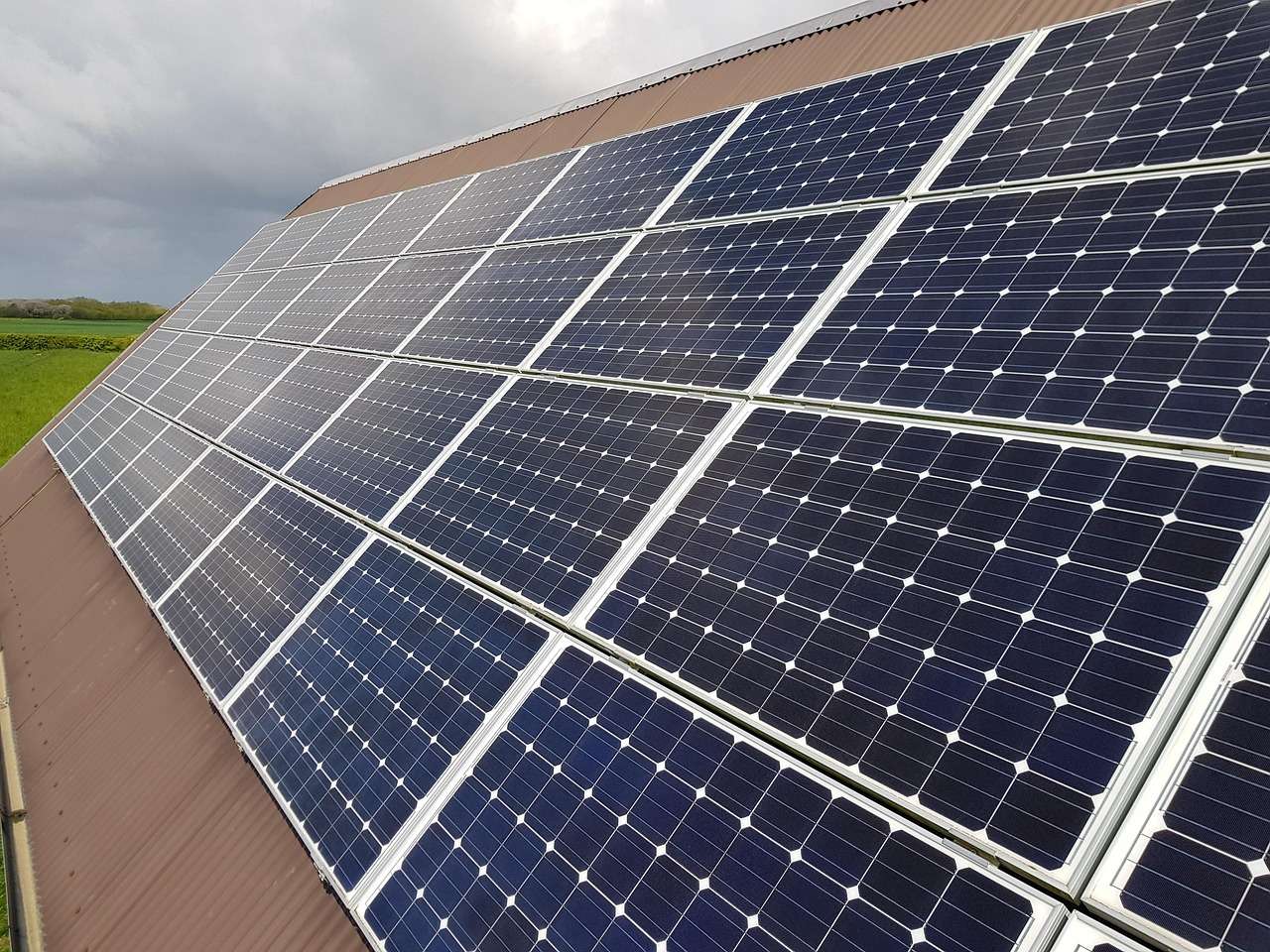
Finance Assets arranges asset finance for renewable energy equipment, helping UK businesses fund solar panels, battery storage, heat pumps, biomass boilers and EV chargers for their own premises.
Asset finance for renewable energy spreads the cost of a system over 3 to 10 years, so the business can start cutting its energy bills without paying for the installation upfront. It suits manufacturers, warehouses, farms, hotels and other businesses with high energy use, as well as the installers who fit the equipment.
Written by Marcus Wright, founder of Bolton Business Finance Ltd, in financial services since 2008 and a commercial finance broker since 2019. Last reviewed October 2026.
On this page
The short version
- Asset finance lets businesses spread the cost of solar panels, batteries, heat pumps, biomass boilers and EV chargers.
- Many businesses set the term so that expected energy savings sit close to the monthly payment.
- Panels on rented premises usually need the landlord’s consent.
- We fund equipment for a business’s own premises, not utility-scale solar or wind farms.
- Finance Assets arranges asset finance for businesses trading as limited companies and LLPs, and for sole traders and partnerships on agreements over £25,000.
| Item | Detail |
|---|---|
| Equipment covered | Rooftop and ground-mounted solar PV, battery storage, heat pumps, biomass boilers, EV chargepoints, LED lighting and installers’ vans and kit |
| Terms | Usually 3 to 7 years, and up to 10 years on some larger systems |
| Paid upfront | Hire purchase: often a 10% deposit plus VAT. Leases: usually 1 to 3 rentals in advance |
| New or used | Mostly new systems from an established installer |
| Not covered | Utility-scale solar farms, wind farms and projects built to sell power |
| Who we help | Limited companies and LLPs, plus sole traders and partnerships on business agreements over £25,000 |
Renewable energy equipment we finance
Lenders will fund renewable and energy-saving equipment installed at a business’s own premises, along with the equipment installers need to fit it.
| Equipment group | Examples |
|---|---|
| Solar PV | Rooftop arrays on factories, warehouses, offices and farm buildings, ground-mounted arrays, inverters and mounting systems |
| Battery storage | Commercial battery systems that store solar output or cheaper off-peak power |
| Heating | Air source and ground source heat pumps, and biomass boilers |
| EV charging | Workplace and fleet chargepoints, rapid chargers and the electrical upgrades needed to run them |
| Energy efficiency | LED lighting, voltage optimisation and building controls installed alongside a renewable system |
| Installer equipment | Vans, access towers, mobile elevating work platforms, telehandlers and test equipment for electrical contractors and renewable installers |
How businesses use asset finance for renewables
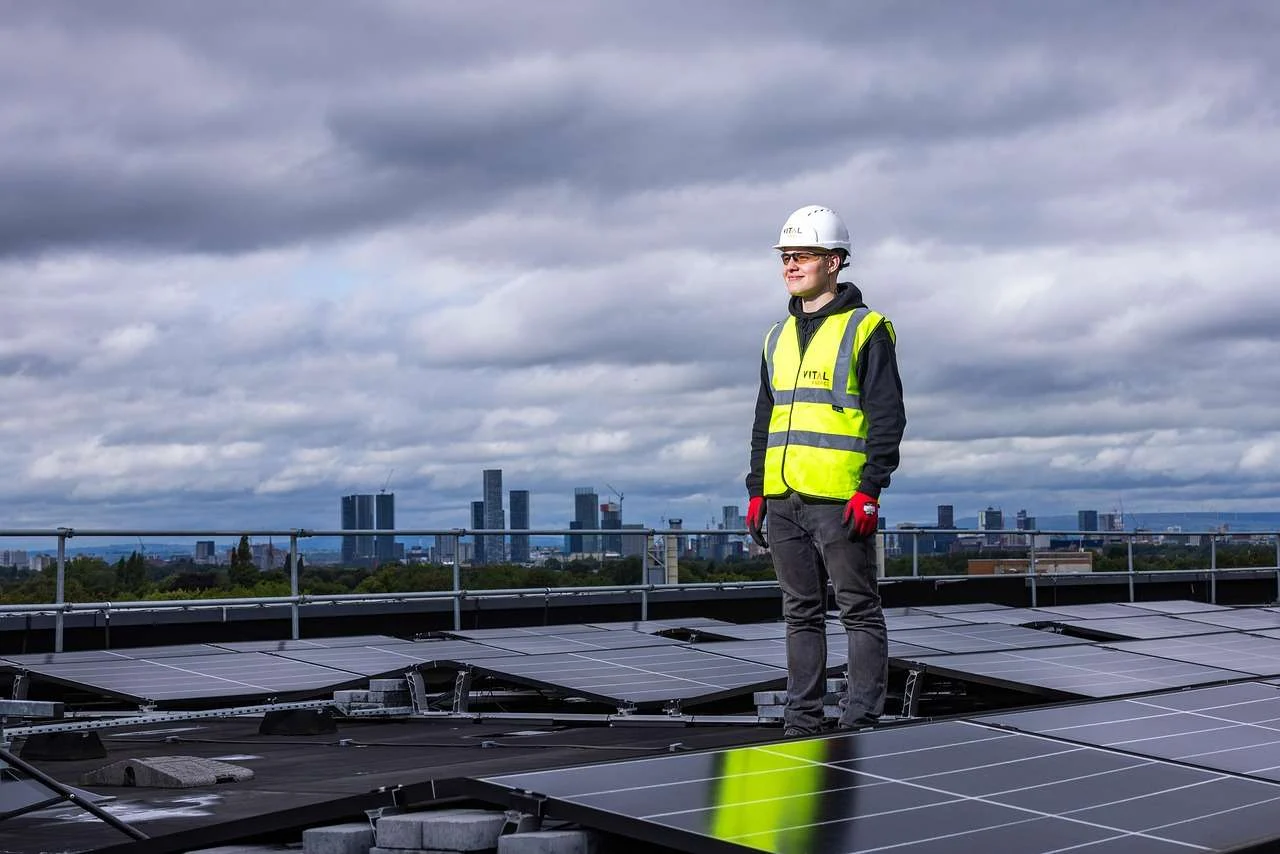
Most businesses fund renewable equipment to lower running costs and protect themselves from rising energy prices, without tying up cash.
- Cutting electricity bills. Fitting rooftop solar so daytime power comes from the business’s own roof.
- Storing power. Adding batteries to use more of the solar output or to run on cheaper off-peak electricity.
- Replacing old heating. Swapping oil or gas boilers for heat pumps or biomass boilers.
- Electrifying a fleet. Installing chargepoints for electric vans, cars and forklifts.
- Equipping an installer. Funding vans and access equipment for firms that fit renewable systems.
Finance options for renewable energy equipment
Most businesses buy renewable systems on hire purchase or a finance lease, because the equipment stays fixed in place for many years. Our types of asset finance guide covers each option in more depth.
| Type | How it works | Suits |
|---|---|---|
| Hire purchase | A deposit, then fixed payments. You own the system after the last one | Solar, batteries and heat pumps you will keep |
| Finance lease | Rentals with VAT added to each one. The lender owns the equipment | Larger systems where you want to avoid paying VAT upfront |
| Operating lease | Lower rentals priced around the expected resale value. You hand it back at the end | EV chargers and equipment likely to be replaced |
| Sale and hire purchase back | A lender buys equipment you own and sells it back over a fixed term | Releasing cash from a system you have already paid for |
Hire purchase for solar panels and batteries
Hire purchase is the most common way to fund a commercial solar and battery system. You pay a deposit and the VAT upfront, then fixed payments, and the system is yours after the last one. You are treated as the owner for tax from the start, so you may be able to claim capital allowances.
Finance lease for larger renewable systems
A finance lease adds VAT to each rental instead of asking for it upfront, which helps on larger installations. The lender keeps ownership, and at the end you can usually keep the system on a small secondary rental.
EV charger finance for business
Workplace and fleet chargepoints can be funded on their own or alongside solar and batteries. Businesses moving to electric vans or forklifts often fund the chargers and the vehicles together. See our forklift truck finance guide for electric forklifts.
Finance for renewable energy installers
Solar, heat pump and chargepoint installers can fund vans, access equipment and test kit on hire purchase or leasing. Our electrical contractors and building contractors guides cover this in more detail.
VAT and tax on renewable energy equipment
Commercial solar panels, batteries and heat pumps usually carry VAT at the standard rate, which a VAT-registered business can normally reclaim. On hire purchase the VAT is paid upfront, while on a lease it is added to each rental. Solar panels are usually treated as special rate plant for capital allowances, but the Annual Investment Allowance can often cover the cost in the year of purchase. Lease rentals are usually an allowable business expense. Check how the rules apply to your business with your accountant.
Commercial solar finance costs: a worked example
A £110,000 rooftop solar array and a £40,000 battery system, £150,000 in total, cost about £2,802 a month on a 5-year hire purchase, or about £2,172 a month over 7 years.
| Item | 5-year term | 7-year term |
|---|---|---|
| System price (excluding VAT) | £150,000 | £150,000 |
| Deposit (10%) | £15,000 | £15,000 |
| VAT paid upfront (reclaimable) | £30,000 | £30,000 |
| Amount financed | £135,000 | £135,000 |
| Monthly payment | £2,802.38 | £2,172.03 |
| Total interest | £33,143 | £47,450 |
The longer term lowers the monthly payment by about £630, at a cost of around £14,307 more interest. If the system is expected to save around £2,000 to £2,500 a month on electricity, the longer term brings the payment close to the saving, while the shorter term clears the finance sooner.
Illustration calculated in November 2026, assuming an interest rate of 9% a year, payments monthly in arrears and no balloon. It is not a quote, and energy savings will vary with the system, the site and energy prices. Your rate depends on your trading history, credit profile and the equipment.
What lenders look for in renewable energy finance
Lenders look at the usual financial documents, plus the details that show the system is well designed and the business can keep it in place for the full term.
- Your last 2 years of accounts, or management accounts and a forecast for newer businesses
- Your last 3 to 6 months of business bank statements
- The installer’s quote, system design and expected generation or energy savings
- Details of the installer, including MCS certification where relevant, warranties and track record
- Proof you own the premises, or your lease and the landlord’s consent to the installation
- Photo ID and address history for each director, member or partner
Related guides
Who we can help
We arrange asset finance for businesses installing renewable energy equipment that trade as UK limited companies and LLPs, and for sole traders and partnerships on agreements over £25,000 that are for business purposes. We are not authorised by the FCA, so we cannot arrange agreements of £25,000 or less for sole traders or partnerships of two or three partners, or finance for personal use.
Asset finance for renewable energy FAQs
Can I finance solar panels on a building I rent?
Often, yes, but the lender will usually want the landlord’s written consent to the installation and an agreement that lets the lender remove the panels if the finance is not repaid. A longer lease helps, ideally one that runs past the end of the finance term. Owner-occupied premises are simpler, although a mortgage lender’s consent may still be needed.
Do the energy savings have to cover the monthly payments?
No, lenders base their decision on the business’s accounts and affordability, not just the projected savings. A clear savings case still helps, and many businesses aim for a term where the expected savings on electricity bills are close to the monthly payment, so the system largely pays for itself.
Can batteries, heat pumps and EV chargers go on the same agreement as solar?
Yes. A rooftop solar array, battery storage, inverters, heat pumps and EV chargepoints can be funded together on one agreement if they come from the same installer or project. Separate agreements can also be used where the equipment has different working lives.
Do you arrange finance for solar farms or wind farms?
No. We arrange asset finance for businesses installing renewable equipment on their own premises to cut their own energy costs, and for firms that install it. Utility-scale solar farms, wind farms and other projects built to sell power to the grid need specialist project finance, which we do not arrange.
Does the installer need to be MCS certified?
Many lenders prefer an MCS certified installer for solar PV, batteries and heat pumps, and it is usually needed to receive payments for exported electricity under the Smart Export Guarantee. For larger commercial systems, lenders will also look at the installer’s track record, warranties and the system design.
Can renewable energy installers finance their own vans and equipment?
Yes. Solar, heat pump and EV charger installers can fund vans, access towers, mobile elevating work platforms, test equipment and tools on hire purchase or leasing. Our electrical contractors guide covers this in more detail.
Get an asset finance quote for renewable energy equipment
Tell us what you want to install
Send us the installer’s quote, the system details and a few facts about your premises and energy use. We will come back with the options that are realistic and what they are likely to cost.
About the author
Marcus Wright is the owner and founder of Bolton Business Finance Ltd, which trades as Finance Assets. He has worked in financial services since 2008, beginning his career at Santander, and has been a commercial finance broker since March 2019.
He founded Bolton Business Finance in 2020 to give businesses access to the whole lending market rather than one bank’s own product range. The firm is a member of the National Association of Commercial Finance Brokers and works with a panel of 135+ lenders. Call 0161 546 9128.
Finance Assets is a trading name of Bolton Business Finance Ltd, an independent commercial finance brokerage, not a lender. We are not authorised by the Financial Conduct Authority and can only complete non-regulated introductions. All lending is for business purposes only. Registered address: Westgate House, 1 Westgate Avenue, Bolton, Greater Manchester, BL1 4RF. Company number 12495909.