
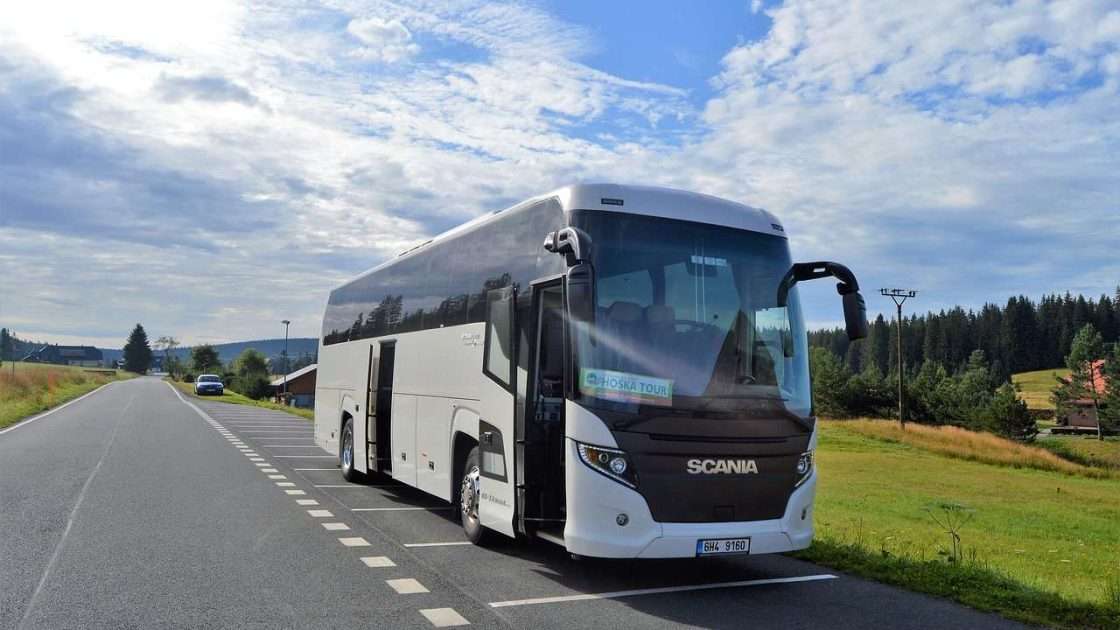
Finance Assets arranges asset finance for bus and coach operators, helping UK businesses fund coaches, service buses, minibuses and depot equipment.
Asset finance for bus and coach operators spreads the cost of a vehicle over 3 to 7 years, so an operator can take on a new contract or renew the fleet without tying up its cash. We arrange coach finance, bus finance and minibus finance, new and used, for operators running tours, private hire, school contracts and local services.
Written by Marcus Wright, founder of Bolton Business Finance Ltd, in financial services since 2008 and a commercial finance broker since 2019. Last reviewed September 2026.
On this page
The short version
- Asset finance lets bus and coach operators spread the cost of coaches, buses and minibuses over 3 to 7 years.
- Hire purchase leads to ownership, while leasing and contract hire keep the vehicle with the lender.
- Lenders look closely at the operator’s licence and at the contracts the vehicles will serve.
- Accessibility and emissions standards affect a vehicle’s value, so they shape the terms lenders offer.
- Finance Assets arranges bus and coach finance for limited companies and LLPs, and for sole traders and partnerships on agreements over £25,000.
| Item | Detail |
|---|---|
| Vehicles covered | Coaches, service buses, minibuses, midi coaches and accessible vehicles |
| Terms | Usually 3 to 5 years on used vehicles, and up to 7 years on new coaches and buses |
| Paid upfront | Hire purchase: often a 10% deposit plus VAT. Leases and contract hire: usually 1 to 3 rentals in advance |
| New or used | Both, including vehicles from other operators and auctions |
| Extras | Wheelchair lifts, ticketing, CCTV, telematics and livery can often be included |
| Who we help | Limited companies and LLPs, plus sole traders and partnerships on business agreements over £25,000 |
Vehicles and equipment we finance for bus and coach operators
Lenders fund almost every passenger vehicle an operator runs, along with the equipment that keeps it on the road.
| Group | Examples |
|---|---|
| Coaches | Executive, touring and double-deck coaches, new and used |
| Service buses | Single-deck and double-deck buses for local and tendered routes |
| Minibuses and midi coaches | 16-seat minibuses, midi coaches and accessible minibuses for school and community contracts |
| Accessibility | Wheelchair lifts, ramps and accessibility conversions |
| Electric and low emission | Electric buses and coaches, depot chargers and, with some lenders, separate battery finance |
| Depot and workshop | Vehicle lifts, bus wash systems, diagnostic equipment and fuel systems |
| On-board technology | Ticketing machines, CCTV, telematics and passenger Wi-Fi |
For goods vehicles, trailers and vans, see haulage finance.
How bus and coach operators use asset finance
Operators usually turn to asset finance when a contract, a regulation or a season means they need vehicles before the income arrives.
- Winning a contract. Funding the vehicles for a school, council or rail replacement contract before the first payment.
- Meeting accessibility rules. Replacing or converting older vehicles to meet the accessibility regulations where they apply.
- Renewing for emissions. Moving to newer engines so the fleet can work in clean air zones.
- Going electric. Funding electric buses and the depot charging to run them.
- Growing tours and private hire. Adding coaches ahead of the busy season.
- Releasing cash. Refinancing vehicles the business owns outright.
Finance options for bus and coach operators
Most operators buy coaches on hire purchase and use leases or contract hire for vehicles tied to a fixed-term contract. Our types of asset finance guide covers each option in more depth.
| Type | How it works | Suits |
|---|---|---|
| Hire purchase | A deposit, then fixed monthly payments. You own the vehicle after the last one | Coaches you will run for many years |
| Finance lease | Rentals with VAT added to each one. The lender owns the vehicle | Keeping cash and VAT outlay low on a fleet order |
| Operating lease | Lower rentals priced around the vehicle’s expected resale value. You hand it back at the end | Buses tied to a contract with a fixed end date |
| Contract hire | A fixed rental for an agreed term and mileage, often with maintenance included | Minibuses and buses with predictable monthly costs |
Hire purchase for bus and coach operators
Hire purchase for bus and coach operators is the usual way to buy coaches, because a well-kept coach can earn for well over a decade. You pay a deposit, often around 10% plus the VAT, then fixed monthly payments, and the vehicle is yours after the last one. A balloon payment can lower the monthly cost, as the worked example below shows.
Finance lease for bus and coach operators
A finance lease for bus and coach operators spreads the VAT across the rentals instead of paying it upfront, which helps on a multi-vehicle order. The lender owns the vehicle throughout. At the end you can usually keep it on a small secondary rental, or sell it and receive most of the proceeds.
Operating lease for bus and coach operators
An operating lease for bus and coach operators suits vehicles bought for a contract with a fixed end, such as a five-year tendered route. Rentals are set around what the bus should be worth at the end, the lender takes that resale risk, and the vehicle goes back when the contract finishes.
Contract hire for bus and coach operators
Contract hire for bus and coach operators is most common on minibuses and service buses. You pay a fixed monthly rental for an agreed term and mileage, and maintenance can often be included, which keeps the cost per vehicle predictable when you price a contract. The vehicle goes back at the end, with excess mileage and damage charged.
VAT and tax for bus and coach operators
A coach, bus or minibus with 10 or more seats is not a car for VAT, so a VAT-registered operator can usually reclaim the VAT on it. Fares on these vehicles are usually zero-rated, which means many operators reclaim more VAT than they charge. On hire purchase the VAT is usually paid upfront, and on a lease or contract hire it is added to each rental. With hire purchase you may be able to claim capital allowances, and lease rentals are usually an allowable business expense. Check the tax treatment with your accountant.
Coach finance costs: a worked example
A used executive coach at £140,000 costs about £2,616 a month on a 5-year hire purchase, or about £2,244 a month with a 20% balloon.
| Item | Standard | With 20% balloon |
|---|---|---|
| Coach price (excl. VAT) | £140,000 | £140,000 |
| Deposit (10%) | £14,000 | £14,000 |
| VAT paid upfront | £28,000 | £28,000 |
| Monthly payment (60 months) | £2,615.55 | £2,244.32 |
| Final balloon payment | None | £28,000 |
| Total interest | £30,933 | £36,659 |
The balloon lowers the monthly payment by about £371, which can make a contract price more competitive, but adds around £5,726 of interest over the term. Many operators plan to meet the balloon by selling or refinancing the coach at the end.
Illustration calculated in September 2026, assuming an interest rate of 9% a year. It is not a quote. Your rate depends on your trading history, credit profile and the vehicle.
What lenders look for in bus and coach operators
Lenders look at the usual financial documents, plus the licence and contracts that show the vehicles will earn.
- Your last 2 years of filed accounts, or management accounts and a forecast for newer operators
- Your last 3 to 6 months of business bank statements
- Your PSV operator’s licence number and the vehicles it authorises
- Details of school, council, rail replacement or private hire contracts, and how long they run
- A fleet list with vehicle ages, and details of existing finance agreements
- Supplier quotes or invoices, plus photo ID and address history for each director, member or partner
Related guides
- Asset finance for public transport operators, for contracted services and electric buses
- Asset finance for private schools and colleges, including school minibuses
- Asset finance for railway contractors
- HGV finance, for tractor units and rigid trucks
- Transport and haulage finance
- All sectors we finance
- Types of asset finance
Who we can help
We arrange asset finance for bus and coach operators that trade as UK limited companies and LLPs, and for sole traders and partnerships on agreements over £25,000 that are for business purposes. We are not authorised by the FCA, so we cannot arrange agreements of £25,000 or less for sole traders or partnerships of two or three partners, or finance for personal use.
Asset finance for bus and coach operators FAQs
Can I get finance on a used coach?
Yes. Used coaches and buses from dealers, other operators and auctions are widely funded. Lenders look at age, mileage and service history, and older vehicles may be offered a shorter term so the agreement ends while the coach still has resale value. Accessibility and emissions standards affect that value, so lenders will ask about both.
Do I need a PSV operator’s licence to get coach finance?
Usually, yes. A business carrying passengers for hire or reward in vehicles with nine or more passenger seats needs a PSV operator’s licence, and lenders ask for the licence number and the vehicles it authorises. A newer operator with a fresh licence can still be funded, although a larger deposit may be needed.
Can I finance a minibus for school contracts?
Yes. Minibuses and midi coaches for home-to-school and council contracts are funded on hire purchase, leasing or contract hire. Lenders like to see the contract, its length and its renewal history, and some will match the finance term to it. Where the accessibility regulations apply, lenders will check the vehicle meets them.
Can asset finance fund electric buses?
Yes. Some lenders fund electric buses and coaches, and a few will finance the batteries separately from the vehicle to reduce the upfront cost. Depot charging equipment can often go on the same agreement. Grants may cover part of the cost, and lenders will want to know what has been awarded.
Can I finance several coaches under one agreement?
Often, yes. Many lenders set up a master agreement with one credit approval, then add each coach, bus or minibus as a new schedule as it arrives. This keeps the terms consistent across the fleet and saves a fresh application for every vehicle.
Can I refinance coaches I already own?
Yes. Through a sale and hire purchase back, a lender buys coaches or buses you own outright and sells them back over a fixed term, so they stay in service. The amount depends on their current value and age. Operators use it to fund a contract win, fleet renewal or working capital.
Get a bus and coach finance quote
Tell us about the vehicles
Send us the vehicles, the prices and a few details about your contracts. We will come back with the options that are realistic and what they are likely to cost.
About the author
Marcus Wright is the owner and founder of Bolton Business Finance Ltd, which trades as Finance Assets. He has worked in financial services since 2008, beginning his career at Santander, and has been a commercial finance broker since March 2019.
He founded Bolton Business Finance in 2020 to give businesses access to the whole lending market rather than one bank’s own product range. The firm is a member of the National Association of Commercial Finance Brokers and works with a panel of 135+ lenders. Call 0161 546 9128.
Finance Assets is a trading name of Bolton Business Finance Ltd, an independent commercial finance brokerage, not a lender. We are not authorised by the Financial Conduct Authority and can only complete non-regulated introductions. All lending is for business purposes only. Registered address: Westgate House, 1 Westgate Avenue, Bolton, Greater Manchester, BL1 4RF. Company number 12495909.